

Additional information and answers

Custom tattoos in Spokane Washington
A custom tattoo is not something you pick off a wall, point at, and forget by next month. When people search for a custom tattoo Spokane Washington artists can create with real care, they are usually looking for more than ink. They want artwork that feels personal, holds up over time, and comes from a studio that treats the process with respect.
That difference matters. A custom piece should fit your body, your style, and the reason you wanted it in the first place. Whether you already have a clear concept or only a rough idea, the right artist helps shape it into something stronger than what you first imagined.
What makes a custom tattoo different
Custom work starts with collaboration. Instead of pulling a design straight from pre-drawn flash, the artist builds the piece around your idea, references, placement, and goals. That can mean a fully original design, a fresh take on a classic style, or a piece that blends influences into something that feels like your own.
This is where experience shows. A good custom tattoo is not just a cool drawing. It has to read well on skin, match the part of the body it lives on, and age in a way that still looks intentional years later. Fine detail, bold contrast, spacing, and flow all play a role.
There is also a practical side that clients sometimes overlook. Not every concept works at every size, and not every body placement is ideal for every style. A strong artist will be honest about those trade-offs. That honesty protects the final result.
Finding the right custom tattoo in Spokane Washington
If you are choosing a studio for custom work, the first thing to look for is range with consistency. An artist may specialize in realism, traditional, blackwork, illustrative design, or something harder to label, but the quality should stay steady from piece to piece. Clean linework, balanced composition, strong saturation, and healed results all matter more than a dramatic social media post.
The next thing is communication. A custom tattoo experience should feel collaborative, not confusing. You should know how the consultation works, what kind of input is helpful, how revisions are handled, and what to expect on the day of your appointment. That kind of clarity builds trust before the stencil even hits the skin.
Cleanliness and professionalism should never be treated like bonus features. They are basic standards. A studio should make you feel confident about hygiene, setup, and aftercare guidance. The creative side of tattooing is personal, but the professional side needs to be rock solid.
Your idea does not need to be perfect before you book
A lot of people put off reaching out because they think they need the final design already figured out. Usually, that is not true. Some clients come in with a detailed concept board, while others show up with a theme, a mood, or a single meaningful image. Both can lead to great work.
What helps most is knowing the direction. Maybe you want a memorial piece that avoids obvious symbols. Maybe you want blackwork that feels bold without becoming too heavy. Maybe you like traditional structure but want custom subject matter. Those kinds of preferences give the artist something useful to build from.
References can help, but they work best when they show style rather than something you want copied exactly. A custom tattoo should reflect your taste and story, not someone else's finished piece. The goal is inspiration, not duplication.
Style matters, but fit matters more
People often start by saying they want realism, traditional, fine line, or black and gray. That is a good starting point, but style alone does not decide the final outcome. The better question is how that style fits your concept, your placement, and the level of longevity you want.
Realism can be stunning, but it depends heavily on contrast, scale, and subject choice. Traditional work tends to age well because it leans on bold lines and readable shapes. Blackwork can be clean and graphic or dense and dramatic depending on how it is designed. Fine line can look elegant, but it usually demands smart restraint if you want it to stay legible over time.
That is why consultation matters so much. A skilled artist will not force your idea into a trend that does not serve it. They will help match the concept to a style that gives the tattoo the best shot at looking great both now and later.
Placement changes everything
The same design can feel completely different on a forearm, ribcage, calf, hand, or upper arm. Placement affects visibility, pain level, how the tattoo flows with muscle and movement, and how much detail the area can realistically hold.
For example, a long vertical design may feel natural on the outer forearm but awkward on the chest. A highly detailed piece may work beautifully at a larger size on the thigh but lose impact if it gets compressed into a smaller area. Even simple lettering can shift in tone depending on where it sits.
Clients sometimes walk in focused on one exact spot, and sometimes that spot is right. Other times, a slight adjustment makes the tattoo stronger. Being open to that conversation usually leads to better work.
The best custom process feels personal and professional
A great studio experience is not about pressure or sales language. It is about being heard, guided, and respected. That starts with the consultation and continues through design planning, tattooing, and aftercare.
You should feel comfortable asking questions. If you are a first-timer, you deserve clear answers without judgment. If you already have several tattoos, you still want an artist who takes your new piece seriously instead of treating it like a routine transaction.
That client-centered approach is part of what makes custom work worth it. At a studio like Epik Starr Tattoo, the value is not just in getting tattooed. It is in working with artists who care about craftsmanship and want the finished piece to feel like it belongs to you.
Preparing for your appointment
Once your design and placement are set, preparation is simple but important. Show up rested, hydrated, and fed. Wear clothing that makes the tattoo area easy to access, and plan your day so you are not rushing in or out.
If your session is longer, expect some physical fatigue. Tattoos are exciting, but they are still a process your body has to handle. The better prepared you are, the easier it is to stay comfortable and sit well.
It also helps to trust the plan. Last-minute changes can sometimes be made, but major redesigns on appointment day usually create stress and compromise. The strongest custom sessions happen when the design work has already been handled with care.
Aftercare is part of the artwork
A custom tattoo does not end when the bandage goes on. Healing plays a direct role in how the final piece settles into the skin. Even the best tattoo can heal poorly if aftercare is ignored.
That does not mean the process has to be complicated. It means listening to the guidance you are given, keeping the area clean, avoiding unnecessary irritation, and being patient while the skin recovers. Picking, overmoisturizing, or exposing a fresh tattoo to the wrong environment can affect the result.
Long-term care matters too. Sun exposure changes tattoos over time, especially pieces with fine detail or softer gray tones. Protecting your tattoo helps preserve the work you invested in.
Why custom work keeps its value
There is a reason custom tattoos continue to matter in a world full of fast trends and recycled designs. They carry more intention. They reflect a real exchange between client and artist. And when the process is done well, the result feels less like a product and more like a piece of personal art you happen to wear every day.
That does not mean every custom tattoo needs a deep backstory. Some are meaningful because of memory, identity, or life change. Others are meaningful because they simply look and feel right. Both are valid.
If you are searching for the right custom tattoo in Spokane Washington, focus on the experience as much as the image. Look for artistry, honesty, and a studio environment that treats your idea with care. The right tattoo should feel like your vision got sharper, stronger, and more at home on your skin than you thought possible.
Good custom work stays with you for obvious reasons. The better reason is that it still feels true when you look at it years later.

What does it take to be a professional piercer
A sharp eye helps. Steady hands matter. But if you're asking what does it take to be a professional piercer, the real answer starts with responsibility. Piercing is not just about style or trend-driven placement. It is hands-on work that blends anatomy, hygiene, technical precision, client communication, and the kind of judgment people only notice when it is missing.
For anyone thinking about this path, or for clients who want to understand what separates a true professional from someone who just owns a needle, the standard is higher than most people realize. A professional piercer is part artist, part technician, and part safety advocate. The best ones make the process feel calm and easy because they have already done the hard work behind the scenes.
What does it take to be a professional piercer in practice?
At the foundation, it takes training that goes beyond watching videos or piercing friends. A professional piercer needs a real understanding of aseptic technique, cross-contamination prevention, wound care, anatomy, jewelry sizing, placement balance, and how different bodies heal. That knowledge is not optional. It directly affects the outcome.
Good piercing is also deeply client-centered. Two people can ask for the same piercing and need completely different guidance based on anatomy, lifestyle, work environment, healing history, or jewelry goals. A professional knows when to say yes, when to modify the plan, and when to say no because a placement is not safe or likely to heal well.
That judgment is one of the biggest differences between a hobbyist and a professional. Skill is not just about getting jewelry into the body. It is about doing it in a way that respects the body long after the appointment is over.
Training matters more than confidence
A lot of people are drawn to piercing because they love body art culture, and that passion is a great start. It is not enough on its own. Professional piercing requires structured learning and supervised experience.
Most respected piercers build their foundation through an apprenticeship or closely guided training environment. That is where they learn instrument handling, sterilization workflows, setup breakdown, consent procedures, aftercare education, and how to keep a station clean without cutting corners. It is also where they start to understand that every step before and after the actual piercing is just as important as the moment of insertion.
There is a practical side to this too. Laws and health department requirements vary by state and local jurisdiction, so a serious piercer has to know the legal side of the job. Bloodborne pathogen training, first aid knowledge, record keeping, age verification, and consent procedures all matter. Being talented with placement does not excuse being careless with compliance.
Hygiene is not a bonus feature
If you want the shortest answer to what does it take to be a professional piercer, start here: strict hygiene standards, every single time.
Clients should never have to guess whether a studio takes cleanliness seriously. A professional piercer understands sterilization, single-use items, barrier protection, disinfecting protocols, and the difference between clean, sanitized, and sterile. Those words are not interchangeable, and confusing them can put people at risk.
This is one of the least glamorous parts of the job, but it is central to the craft. A beautiful piercing is not a success if the process was unsafe. Professionals build trust by treating hygiene as part of their identity, not as a sales point they bring up only when asked.
Anatomy knowledge changes everything
Piercing is highly individual work. Bodies are different. Tissue depth is different. Ear shapes vary. Navel structure varies. Oral anatomy varies. Skin tension, healing response, and lifestyle all affect what is viable.
That means a professional piercer cannot rely on a one-size-fits-all map. They need to assess anatomy in real time and recommend placements that fit the person in front of them. Sometimes that means adjusting angles for better healing. Sometimes it means recommending a different jewelry style. Sometimes it means turning down a piercing that looks great online but is a poor match for the client's body.
This is where experience shows. Anyone can copy a photo. A professional knows how to create a result that looks balanced on the actual client and has the best chance of healing well.
Jewelry knowledge is part of the job
Professional piercing is also about understanding jewelry materials, sizing, threading, wearability, and healing compatibility. Cheap or poorly fitted jewelry can create problems even if the piercing itself was done correctly.
A good piercer knows why material quality matters, how initial jewelry should accommodate swelling, and when a client needs a different length, diameter, or style for comfort and healing. They also know that aesthetics and function have to work together. The best jewelry choice is not always the flashiest one on day one.
People skills are not optional
Some clients arrive excited. Some are nervous. Some have done this many times and want something very specific. Others need help understanding the process from start to finish. A professional piercer has to meet all of those people with patience, clarity, and respect.
That means listening well, explaining placement options in plain language, setting realistic expectations, and never pressuring someone into a choice. It also means staying calm when a client is anxious, knowing how to keep the appointment grounded, and recognizing when someone needs more information before moving forward.
Trust is a major part of body art. People are putting their comfort, appearance, and health in someone else's hands. The way a piercer communicates can be just as memorable as the technical work itself.
Precision comes from repetition and restraint
There is a creative side to piercing, especially when working with curated ear projects or placements that complement tattoos and personal style. But the technical side has to lead. Precision matters more than speed, and consistency matters more than showing off.
A professional piercer develops hand control, angle awareness, and procedural discipline over time. That takes repetition, feedback, and humility. Even talented people need practice to become consistent under real studio conditions.
Restraint matters too. Not every idea should be approved. Not every placement is worth forcing. One of the clearest signs of professionalism is being willing to protect the client from a bad decision, even if it means turning away a sale.
What clients should look for in a professional piercer
If you are booking an appointment rather than pursuing the career yourself, the same standards still apply. A professional piercer should be able to explain the process clearly, answer questions without defensiveness, use quality jewelry, maintain a visibly clean environment, and make recommendations based on your anatomy instead of giving the same answer to everyone.
You should also feel that your concerns are taken seriously. Good studios do not rush people through important decisions. They create an experience that feels both safe and personal, because both matter.
That balance is part of what strong studios build their reputation on. At places like Epik Starr Tattoo, the value is not just the service itself. It is the combination of craftsmanship, professionalism, and a client experience that respects how personal body art really is.
The mindset behind long-term success
So what does it take to be a professional piercer over the long run? More than talent. It takes discipline, continued education, consistency, and respect for the work.
Trends change. Jewelry styles change. Techniques evolve. Health standards tighten. A true professional keeps learning. They stay open to better methods, sharper standards, and more thoughtful ways to serve clients. They care about the result, but they also care about the process that gets someone there safely.
That mindset is what gives the title weight. Professional is not just a label. It is a daily standard, built appointment by appointment.
If piercing is the path you want, treat it like a craft worth earning. And if you are choosing a studio, look for the person who treats your body with the same seriousness they bring to their skill.

12 questions to ask at your consultation
Learn what to ask about design, pain, pricing, placement, healing, and timing.
Walking into a tattoo appointment with a loose idea is normal. Walking into a consultation without the right tattoo consultation questions can leave you with a design, placement, or process that does not fully fit what you wanted. A good consultation is not just paperwork before the fun part starts. It is where your idea gets tested, shaped, and turned into something that will actually work on skin.
The best consultations feel collaborative. You bring the vision, references, and goals. The artist brings experience, technical judgment, and a clear understanding of what will hold up over time. When both sides ask good questions, the tattoo usually gets better.
Why tattoo consultation questions matter
A tattoo can look amazing in your head and still need major adjustments before it belongs on a body. Size changes detail. Placement changes flow. Skin tone affects contrast. Lifestyle affects healing. That is why strong tattoo consultation questions are less about sounding prepared and more about making informed decisions.
This matters even more if your piece is custom. Custom work is not ordering from a menu. It is a creative collaboration. The more honest and specific the conversation is at the start, the fewer surprises you will have later.
12 tattoo consultation questions worth asking
1. Does my idea fit your style?
This is one of the most useful places to start. An artist may be technically capable of many styles, but that does not mean every style is where they do their best work. If you want black and gray realism, bold traditional, fine line floral, or heavy blackwork, ask whether your concept lines up with what they most enjoy and execute well.
A strong artist will be direct. Sometimes the best answer is yes. Sometimes it is, I can do this, but another artist may be a better fit. That kind of honesty is a good sign, not a red flag.
2. Will this design work well in the size I want?
Clients often fall in love with tiny details that look great on paper and disappear on skin. Ask whether your preferred size gives the design enough room to breathe. Lines can blur over time, small text can become hard to read, and packed detail can flatten out if the piece is too small.
This is where experience really shows. An artist can tell you when sizing up will improve clarity and when simplifying the concept will create a stronger tattoo.
3. Is this the best placement for the design?
Placement is not just about where you can see it. It affects shape, movement, pain level, longevity, and how the tattoo sits on your body. A design that looks balanced on the forearm may feel awkward on the ribcage. A vertical concept may flow better on the calf than the shoulder.
Ask for honest feedback about placement, especially if your idea is symbolic and you are emotionally attached to a certain spot. Sometimes the original placement works. Sometimes a small shift makes the tattoo feel far more natural.
4. How might this tattoo age over time?
This is a question more people should ask. Fresh tattoos and healed tattoos are not the same thing. Fine details soften. Super light shading may fade faster. High-friction areas like hands, fingers, feet, and some joint areas can wear differently than more stable parts of the body.
A good consultation should include a realistic conversation about longevity. That does not mean avoiding certain designs or placements entirely. It means knowing the trade-offs before you commit.
5. What changes would you recommend?
If you ask only whether the artist can copy your idea, you miss out on the best part of working with a professional. Ask what they would change to improve flow, readability, contrast, or longevity. You are not handing over your vision. You are giving it the benefit of trained eyes.
Sometimes the suggested change is small, like opening up a section of linework. Sometimes it is bigger, like reworking composition or cutting unnecessary elements. That kind of feedback is often what turns a decent idea into a powerful tattoo.
6. How many sessions will this take?
Some tattoos can be done in one sitting. Others need multiple sessions because of size, detail, placement, or skin response. Large black and gray realism pieces, full-color work, and larger custom compositions often need a longer timeline.
Ask what to expect from the full process, not just the first appointment. It helps with budgeting, scheduling, and preparing mentally for a bigger project.
7. What should I know about pain in this area?
Everyone asks about pain, and for good reason. But pain is not one simple scale. It depends on placement, your own tolerance, session length, and how well you prepare. Ribcage, spine, feet, sternum, and inner arm spots usually feel different than outer forearm or upper arm placements.
The better question is not, Will it hurt? It will. The better question is what kind of sensation to expect, and whether the size and placement you want make sense for your comfort level.
8. What is your pricing structure?
Tattoo pricing should be clear before the appointment starts. Ask whether the piece is priced by the hour, by the project, or by session. Ask about deposits, what they cover, and how rescheduling works.
Price should not be the only filter, but it is part of making a solid decision. A custom tattoo is personal work created for your body, and the cost usually reflects time, skill, design effort, and execution. It is better to have a direct money conversation early than feel uncertain later.
9. When will I see the design?
This is a big one, especially for first-time clients. Different artists handle design previews differently. Some share artwork in advance. Some present the design at the appointment and make adjustments then. Neither approach is automatically wrong, but you should know the process ahead of time.
If you are the kind of client who feels less anxious when expectations are clear, ask exactly how revisions are handled. That keeps the collaboration smooth and avoids unnecessary stress.
10. How should I prepare before the appointment?
Preparation affects your experience more than people think. Ask what to do the day before and the day of your tattoo. Most artists will want you hydrated, fed, rested, and wearing clothing that gives easy access to the area.
This is also the right time to bring up practical details. If you are traveling, working out heavily, or planning a vacation right after the appointment, say so. Sun, sweating, swimming, and friction can all affect healing.
11. What will aftercare look like for this tattoo?
Aftercare is not a small detail at the end. It is part of the tattoo process. Ask what healing will likely look like, how long the area may stay tender, what products are recommended, and what signs mean you should reach out.
Healing can vary depending on placement and how saturated the piece is. A small linework tattoo and a large color piece do not always heal the same way. The more specific the aftercare guidance, the better your healed result is likely to be.
12. Is now the right time for this tattoo?
This may be the most underrated question of all. Timing matters. If you have a beach trip next week, a physically demanding job that rubs against the area, or major life stress that will make aftercare harder, it may be smarter to wait.
A good artist is not just trying to get you into the chair fast. They want the tattoo to heal well and age well. Sometimes the best decision is to shift the appointment so you can give the piece the care it deserves.
What your artist may ask during a tattoo consultation
Consultations work both ways. Expect questions about your references, preferred style, size, placement, previous tattoos, skin sensitivities, and overall goals. If the artist asks a lot of follow-up questions, that is usually a great sign. It shows they are thinking through the design rather than rushing to a yes.
You may also be asked what matters most if compromises need to happen. Maybe the symbolism matters more than exact imagery. Maybe placement matters more than scale. Maybe you want the piece to stay soft and minimal, even if that means giving up some detail. These choices shape the final result.
How to get more from your consultation
Bring reference images, but do not expect a direct copy. Reference should show mood, composition, texture, or style direction. It helps your artist understand what you are drawn to, even if the final design becomes something original.
Be honest about your budget, your pain tolerance, and your uncertainty. You do not need to pretend you have it all figured out. In fact, consultations tend to go better when clients are clear about what they know and what they need help deciding.
If you are in Spokane and looking for a custom piece, the right studio should make you feel informed, not pressured. That balance of professionalism and creative collaboration is what turns a consultation into the start of something you will be proud to wear.
The best question is usually the one you almost feel awkward asking. Ask it anyway. Good tattoos start with clear conversations, and great ones usually start there too.

Tattoo Aftercare Instructions That Work
That fresh tattoo looks finished when you leave the studio, but the healing process is still just getting started. Good tattoo aftercare instructions are what protect the linework, help the color settle well, and lower your risk of irritation or infection during the days ahead.
A new tattoo is basically an intentional wound with artwork inside it. That sounds blunt, but it matters. If you treat it like healed skin too soon, you can end up with patchy areas, heavy scabbing, or a tattoo that settles unevenly. The goal is simple - keep it clean, keep it lightly hydrated, and leave it alone as much as possible.
Why tattoo aftercare instructions matter
Healing is where a lot of the final result gets protected. Your artist puts in the technical work, but the way you care for your tattoo at home plays a real part in how it heals. Even a great tattoo can struggle if it gets over-moisturized, picked at, soaked, or rubbed raw by clothing.
There is also no one-size-fits-all healing timeline. A small fine-line piece on the forearm may calm down quickly. A larger blackwork tattoo, a color-heavy piece, or anything on a high-friction area like ribs, feet, or hands can be more demanding. Skin type, placement, daily routine, and even the weather can change how aftercare feels from person to person.
Tattoo aftercare instructions for the first 24 hours
Start with the instructions your artist gives you, especially if they used a specific bandage or healing wrap. Different coverings are meant to stay on for different amounts of time, so this is one area where your artist's guidance comes first.
Once it is time to remove the wrap, wash your hands before touching the tattoo. Then gently clean the area with lukewarm water and a mild, fragrance-free soap. You are not scrubbing. Use clean hands, not a washcloth or loofah, and rinse away any plasma, leftover ointment, or surface residue.
Pat the tattoo dry with a clean paper towel or let it air dry. Regular bath towels can hold lint and bacteria, and they can be rough on tender skin. After the tattoo is dry, apply a very thin layer of the aftercare product your artist recommended.
Thin is the important word here. A tattoo should not look greasy, slippery, or smothered. Too much product can trap heat and moisture, which often leads to irritation instead of comfort.
How to wash a healing tattoo
For the first several days, wash your tattoo gently two to three times a day, or as advised by your artist. If you work out, sweat heavily, or work in a dusty environment, keeping it clean matters even more. You do not need to obsess over it, but you do want to stay consistent.
Use lukewarm water and fragrance-free soap. Hot water can feel good in the moment, but it can also irritate the area and dry it out. After washing, pat dry and wait a minute before applying a light layer of moisturizer or healing ointment if your artist recommended one.
If your tattoo feels sticky, overly wet, or like it never has a chance to breathe, you are probably using too much product. If it feels tight and flaky all day, you may need a little more moisture. That balance can take a day or two to figure out.
What to put on your tattoo
This is where people often overdo it. More product does not mean better healing. In most cases, your artist will recommend either a gentle healing ointment for the first stage or a fragrance-free lotion once the tattoo begins to dry and peel.
Avoid heavily scented lotions, petroleum-heavy products unless specifically recommended, and anything with harsh active ingredients. Your healing tattoo does not need exfoliants, acne treatments, essential oils, or home remedies. It needs calm, simple care.
If your skin is naturally dry, you may need to moisturize a bit more often. If you are oily or the tattoo is in a warm area under clothing, use less. The right amount should take away that stretched, uncomfortable feeling without leaving a shiny film.
Peeling, flaking, and itching
A healing tattoo usually peels somewhere around days three to seven, though timing varies. It can look a little dull at this stage, and that is normal. You may see light flakes of skin or feel itching as the outer layer sheds.
Do not scratch it. Do not pick flakes. Do not peel off bits of skin because they look ready. That can pull ink before the deeper layers have settled, and it can leave thin spots or scars.
If the itching gets annoying, wash the area gently, let it dry, and apply a small amount of moisturizer. Wearing loose, soft clothing also helps. Sometimes the fix is not more product - it is simply reducing friction.
What to avoid while your tattoo heals
Some of the worst healing problems come from everyday habits people do not think twice about. Submerging a fresh tattoo in water is a big one. Showers are fine, but baths, pools, lakes, hot tubs, and long soaking sessions should wait until your tattoo is fully healed.
Sun exposure is another issue. Fresh tattoos and direct sun are a bad mix. Healing skin is already stressed, and UV exposure can cause irritation and affect how the tattoo settles. Keep it covered with loose clothing while it heals, then use sunscreen once the skin is fully recovered.
You will also want to avoid tight clothing that rubs the area, intense scratching, shaving over the tattoo, and heavy gym sessions that create constant friction if the placement is vulnerable. None of this means you need to stop living your life. It just means being smart about what your skin is dealing with for a couple of weeks.
Signs your tattoo is healing normally
A normal healing tattoo may be red, warm, or slightly swollen at first, especially in the first day or two. It may leak small amounts of plasma, feel tender, and later become dry or itchy. Mild flaking is common.
What you are looking for is steady improvement. The redness should gradually calm down. The tenderness should ease. The tattoo may go through an awkward stage where it looks cloudy or dull before the surface finishes healing.
That weird middle stage makes some people panic, but it is part of the process. Fresh tattoos rarely look photo-ready every day of healing.
When a healing tattoo might need attention
There is a difference between normal irritation and something that needs a closer look. If redness spreads instead of shrinking, if pain gets worse instead of better, or if you see thick discharge, significant swelling, or signs of fever, do not wait it out casually.
An allergic reaction or infection can look different from person to person. Some tattoos get irritated by overuse of products. Others react to friction, sweat, or bandage adhesive. If something feels off, contact your artist and seek medical care when symptoms seem serious or keep escalating.
Professional artists would always rather answer a healing question early than hear that a client tried to tough it out and made things harder.
Healing time and what to expect
Surface healing often takes around two to three weeks, but deeper healing takes longer. That means your tattoo may look mostly settled on the outside while the skin underneath is still recovering. This is why gentle care still matters even after the peeling stage ends.
Placement changes the timeline. Hands, fingers, feet, and joints tend to heal harder because they move more and deal with more contact. Larger pieces can stay tender longer. Color saturation, shading density, and your own skin response all play a role.
If you got work done during a dry Spokane winter, for example, your skin may need a little more attention than it would during a milder season. Healing is personal, and good aftercare adjusts to that without getting complicated.
The biggest mistake people make
The most common mistake is doing too much. Too much washing, too much ointment, too much touching, too much second-guessing. A healing tattoo does best with clean hands, simple care, and patience.
At Epik Starr Tattoo, the goal is always more than getting you through the appointment. It is helping the artwork heal strong, settle clean, and stay something you are proud to wear. If you follow solid aftercare and pay attention to what your skin is telling you, you give your tattoo its best shot at looking great for years.
Treat the healing stage like part of the art process, because it is.
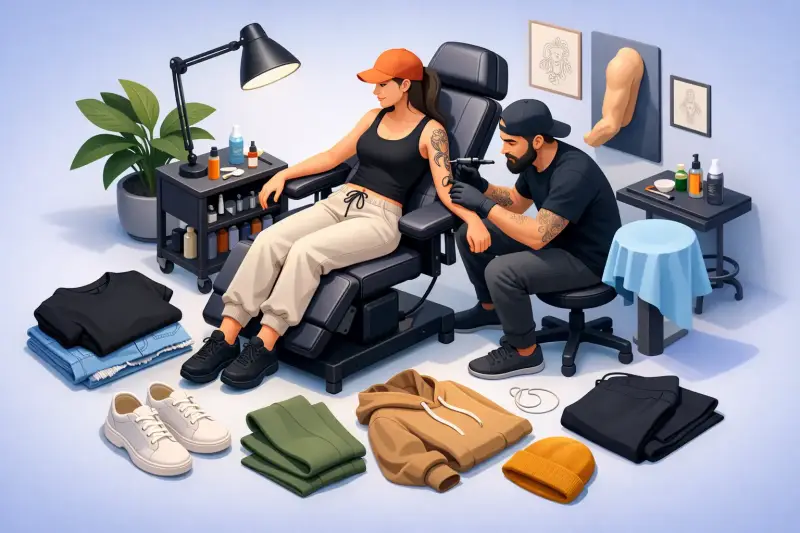
What to wear to your tattoo appointment
Showing up in the wrong outfit for a tattoo session is one of those avoidable mistakes people only make once. If you’re wondering what to wear tattoo appointment day, the short answer is this: wear something clean, comfortable, and easy to move or adjust without fighting your clothes for three hours.
That sounds simple, but the right choice depends on where you’re getting tattooed, how long your appointment will be, and whether your artist needs full access to the area. A great outfit helps your artist work cleanly and helps you stay comfortable from stencil to wrap. A bad one gets in the way, rubs against fresh work, or leaves you half-twisted in a chair trying not to flash the whole studio.
What to wear to a tattoo appointment depends on placement
Tattoo placement changes everything. The goal is to give your artist easy access while keeping you as covered and comfortable as possible. You do not need to show up in a complicated outfit or try to style around the tattoo. You just need practical clothing that lets the area stay exposed without constant adjusting.
For arm tattoos, loose short sleeves or a tank top usually work well. If the tattoo is higher on the shoulder, a strap that can shift easily is more helpful than a tight shirt sleeve that keeps snapping back into place.
For leg tattoos, shorts are usually the easiest option. If the tattoo sits high on the thigh, loose athletic shorts tend to be more workable than denim or anything structured. Tight jeans are almost never the right call for a fresh leg tattoo, especially after the appointment when the area may feel warm, tender, or wrapped.
For rib, stomach, back, or hip tattoos, comfort and access matter even more. You may need layers you can remove or shift around easily. Soft, loose clothing is your friend here. If you’re getting tattooed near the waistband, avoid anything stiff or tight that will press into the area on the way home.
For chest or sternum tattoos, think in terms of simple, adjustable coverage. A zip-up hoodie, button-up shirt, or loose layer can make the appointment feel much more manageable than something you have to pull over your head and keep rearranging.
The best clothes for a tattoo appointment
The best tattoo appointment outfit usually comes down to three things: loose fit, easy access, and no stress. Soft basics win every time. Think joggers, athletic shorts, relaxed T-shirts, tank tops, hoodies, and layers you can take off without dragging fabric across the tattooed area later.
Breathable fabrics tend to feel better during longer sessions. You may be sitting still for hours, and studios can feel cool at one point and warm the next. Layers help. If you’re comfortable, you’re less likely to fidget, and that makes the session easier for both you and your artist.
It also helps to wear clothes you don’t mind getting a little ink on. Professional artists work clean, but tattooing is still hands-on art. Ink, stencil products, soap, and ointment can end up where you did not plan for them. This is not the day for your favorite white shirt or expensive designer pieces.
Dark colors are often the easiest choice for that reason. They hide incidental marks better, and they remove the anxiety of guarding your outfit through the whole session.
What not to wear tattoo appointment day
The fastest way to make a tattoo appointment harder than it needs to be is to wear tight, restrictive, or awkward clothing. Anything that presses into the tattoo area before or after the session can become a problem.
Skip skinny jeans for leg work, tight bras for rib or sternum tattoos, fitted long sleeves for forearms, and complicated layered outfits that are hard to move around. Bodysuits, shapewear, and anything with stiff seams or compression are usually a bad match for fresh tattoos.
You’ll also want to avoid fabric that sheds a lot, irritates the skin, or traps heat. Fresh tattoos need breathing room. Rough material rubbing the area on the way home is not just annoying - it can make you much more uncomfortable.
Jewelry can also get in the way depending on placement. If the tattoo is near the neck, chest, hands, or ankles, it may be easier to leave extra accessories at home. Less adjusting means a smoother appointment.
Dressing for specific tattoo areas
What to wear for an arm or sleeve tattoo
Loose short sleeves work for many upper-arm pieces, while tank tops are often better for shoulder access. If you’re getting forearm work, a roomy T-shirt may be enough, but avoid anything with a snug cuff that will sit on the fresh tattoo afterward.
What to wear for a leg tattoo
Shorts are the easiest answer for calves, shins, and most thigh placements. Loose sweatpants can work for some sessions if they roll up comfortably and stay put, but many clients are happier in shorts from the start.
What to wear for a rib, hip, or stomach tattoo
These spots usually call for soft layers and minimal pressure. Loose sweatpants, athletic shorts, oversized tees, zip-ups, and adjustable basics are practical choices. Tight waistbands can feel brutal after the session, so plan for the trip home too.
What to wear for a back tattoo
A back tattoo often means clothing that can open, shift, or be removed easily while still keeping you comfortable before and after. Button-ups, zip hoodies, and simple layers are useful here. Think functional, not fashionable.
Comfort matters more than style
A tattoo appointment is not a regular outing. You might be sitting, laying down, stretching into odd positions, or holding still longer than expected. Your clothes should support that. If an outfit looks great but rides up, cuts into your skin, or requires constant fixing, it is the wrong outfit for the day.
This matters even more for longer custom sessions. The longer you’re in the chair, the more little discomforts start to feel big. Waistbands dig in. Tight collars get annoying. Heavy fabrics feel hotter. Something as simple as switching to relaxed clothing can make the whole experience smoother.
At Epik Starr Tattoo, that comfort factor is part of what helps create a better client experience. Great tattooing is about craftsmanship, but it’s also about setting up the session so you can settle in and focus on the art.
Think about aftercare before you get dressed
A lot of people only plan for the tattoo itself. Smart clients plan for the ride home too.
Fresh tattoos can feel sensitive right away, and some areas swell more than others. That means the clothes that seemed fine walking into the studio may feel completely different after the appointment. If fabric is going to stick, rub, or squeeze, you’ll notice fast.
That’s why loose clothing is almost always the safest bet. If your artist wraps the tattoo, give that wrap room. If the area will be exposed, make sure nothing will drag across it. This is especially important for thigh tattoos, torso work, and anything near a waistband or strap line.
If you have errands after your appointment, rethink them. It’s much easier to protect a fresh tattoo when you can head straight home in comfortable clothes instead of spending hours walking around in the wrong outfit.
A few practical extras that help
You don’t need to overpack for a tattoo appointment, but a few simple choices can make the day easier. Bring a layer in case you get cold. Eat beforehand so you’re not trying to tough it out on an empty stomach. If you’re coming in for a long session, comfort should be part of your plan, not an afterthought.
It’s also completely fine to ask your artist ahead of time what clothing makes the most sense for your placement. That’s not being high-maintenance. It’s preparation. Different placements can call for different solutions, and your artist has seen every clothing mistake already.
The best rule for what to wear tattoo appointment day
If you can sit comfortably, expose the area easily, and leave without fabric scraping across fresh work, you picked the right outfit. That usually means loose, simple, clean clothes and a little common sense.
You don’t need to dress up for a tattoo appointment. You need to dress for access, comfort, and healing. When your outfit works with the session instead of against it, everything feels easier - and that lets the focus stay where it belongs, on the artwork you came in for.

Tattoo style guide for your next piece
You can love tattoos and still feel stuck when it is time to choose a style. That is where a good tattoo style guide helps. Not by telling you what is trendy, but by showing how different approaches actually look on skin, how they age, and how they support the idea you want to wear for years.
A lot of clients start with subject matter, not style. They know they want a rose, a portrait, a snake, a memorial piece, or something fully custom. The next step is figuring out whether that idea belongs in black and gray realism, bold traditional, fine line, blackwork, or a hybrid approach. Style changes everything. It affects readability, mood, detail level, and even placement.
Why a tattoo style guide matters
Choosing a tattoo style is not like picking a font from a menu. The same concept can feel powerful, soft, aggressive, classic, or modern depending on how it is designed. A wolf done in realism tells a very different story than a wolf done in American traditional. One leans cinematic and detailed. The other hits harder with simplified shapes and bold contrast.
This is why style should come early in the conversation. It helps your artist shape the design around your vision instead of forcing your idea into a format that does not fit. It also helps you set realistic expectations. Some styles hold tiny details better in large-scale work. Others are built to stay bold and readable over time.
Tattoo style guide: the major styles people ask for
Traditional
Traditional tattooing is built on bold outlines, solid color, and strong, simplified imagery. Think roses, daggers, panthers, eagles, skulls, and pin-up inspired motifs. It has a classic look for a reason. These tattoos read clearly from a distance and usually age well because the design language is so intentional.
Traditional is a great fit if you want something timeless and graphic. The trade-off is that it is not the best style for subtle shading, tiny realism, or highly nuanced texture. If you want bold impact, though, it is hard to beat.
Black and gray realism
Black and gray realism focuses on depth, shading, and lifelike detail. Portraits, animals, religious imagery, statues, and dramatic memorial pieces often work beautifully in this style. It can feel smooth, emotional, and visually rich when the composition is strong.
The big advantage here is realism and atmosphere. The thing to keep in mind is scale. Fine detail needs room. If you try to compress a highly detailed concept into a very small area, it can lose clarity over time. Placement, skin tone, and the amount of contrast in the design all matter.
Color realism
Color realism brings lifelike detail together with full color saturation. Flowers, animals, pop culture portraits, and fantasy work can all look incredible in this style. When it is done well, it has serious visual impact.
It also asks more from the design and from the skin. Some concepts need strong contrast to stay readable, and some placements simply hold color better than others depending on sun exposure and wear. If you love vivid work, color realism can be worth it, but it needs thoughtful planning.
Blackwork
Blackwork uses solid black ink, heavy contrast, and a wide range of design approaches. It can mean geometric work, ornamental patterning, abstract forms, illustrative pieces, or large graphic compositions. It is one of the most versatile categories because it can be clean and minimal or dark and intense.
Clients often choose blackwork because it feels bold, modern, and highly intentional. It is also a smart option for designs that rely on silhouette, pattern, or negative space. The main question is whether you want visual weight. Blackwork tends to make a statement.
Fine line
Fine line tattoos use thinner needles and a lighter visual touch. They are popular for script, florals, minimalist symbols, and delicate custom designs. When the concept is simple and the artist controls line quality well, fine line can look elegant and precise.
This is also a style where honesty matters. Fine line is not a magic trick that makes every tiny idea possible. If a design is too detailed for its size, those details can soften together as the tattoo settles and ages. Fine line works best when it stays clean and intentional, not overcrowded.
Illustrative
Illustrative tattooing sits between realism and stylization. It can pull from comic art, drawing, engraving, nature studies, fantasy art, or painterly influences. This style gives artists a lot of room to create something personal rather than copying a strict formula.
For clients, illustrative work is often the sweet spot. You can keep recognizable subject matter while still giving the piece character and movement. If you want something custom that does not look too rigid or too literal, this is worth exploring.
How to use a tattoo style guide for your own idea
Start by asking what matters most to you. Is it detail, boldness, softness, symbolism, color, or longevity of a very specific look? Most people are balancing at least two of those.
Then think about the design itself. A memorial portrait usually asks for a different treatment than a sacred geometry sleeve. A bold patchwork arm might benefit from traditional or blackwork. A botanical piece could go fine line, illustrative, black and gray, or even color realism depending on the mood you want.
Placement matters too. The forearm, thigh, upper arm, and calf often give you enough room for stronger compositions. Smaller areas like fingers, hands, or behind the ear can work, but they demand simpler design choices. Not every style performs equally well in every spot.
Skin is part of the equation as well. Tone, texture, sun exposure, and how your body heals all affect the final result. A good artist is not judging your idea when they suggest adjustments. They are trying to make sure the tattoo works on actual skin, not just on a reference photo.
Style mixing can work, but only when it is intentional
A lot of modern tattooing blends influences. You might like the bold framing of traditional with the detail of realism, or the softness of fine line with ornamental blackwork. Hybrid designs can be beautiful when there is a clear visual plan.
The risk is trying to combine styles that fight each other. If one part of the tattoo is ultra detailed and another part is extremely simplified, the piece can feel disconnected. That does not mean mixing styles is wrong. It means the design needs direction. A custom studio can help you find the balance so the tattoo feels like one piece, not several ideas stacked together.
What to bring to your consultation
The best references are not ten random screenshots that all contradict each other. Bring a few examples that show the look you love, plus a clear description of your subject, preferred placement, and whether you want black and gray or color. If there is a feeling you want the piece to have, say that too. Dark, elegant, feminine, aggressive, sacred, nostalgic, clean, gritty - those words help.
It also helps to be honest about budget and timing. Some styles require more time because they rely on layering, texture, or large-scale composition. A simple idea can still be strong. Bigger is not always better, and more detail is not always smarter.
If you are local to Spokane and looking for a custom piece, this is where an artist-led studio experience really matters. A real consultation should leave you with more clarity, not more confusion.
The best tattoo style is the one that fits your life
Trends come and go, but your tattoo has to keep making sense on your body. That is why the right choice is rarely about what is most popular online. It is about what fits your idea, your taste, your placement, and the way you want the piece to feel years from now.
A strong tattoo style guide does not box you in. It gives you a better starting point for collaboration. Once you know the visual language that fits your piece, your artist can build something that feels personal, readable, and made to last.
The best tattoos usually start with a simple shift - stop asking what style is coolest, and start asking which style tells your story best.

Piercing aftercare instructions that work
That first week after a new piercing is where good results are made. Great placement and quality jewelry matter, but piercing aftercare instructions are what help your body settle in, heal cleanly, and avoid the kind of irritation that turns a simple process into a long one.
A healing piercing is not something you need to constantly manage. In most cases, the best aftercare is consistent, simple, and a lot less hands-on than people expect. Overcleaning, twisting jewelry, and trying every product in the bathroom cabinet usually create more problems than they solve.
The core of piercing aftercare instructions
The goal is straightforward - keep the area clean, protect it from trauma, and give it time. That means cleaning with sterile saline, keeping dirty hands off it, and not changing jewelry too early.
For most piercings, sterile saline is the safest place to start. A gentle rinse or soak helps loosen normal buildup without forcing harsh ingredients into a fresh wound. If your piercer has given you specific directions for your placement, jewelry, or anatomy, follow those first. Not every piercing heals at the same speed, and cartilage, nostril, navel, and oral piercings all come with slightly different needs.
A good rule is to clean the piercing twice a day unless your piercer tells you otherwise. More is not better. Skin that stays irritated, soggy, or stripped can take longer to heal. Think clean and calm, not constantly messed with.
How to clean a new piercing
Wash your hands before touching the area. That part sounds obvious, but it matters more than almost anything else. A fresh piercing does not need extra bacteria from your phone, steering wheel, gym bag, or keyboard.
Use sterile saline and let it run over the piercing site, or apply it with clean gauze. If there is softened crust, you can gently remove it. If it is stuck, leave it alone and try again later. Pulling dried discharge off before it is ready can reopen irritated tissue and restart the cycle.
After cleaning, pat the area dry with clean disposable gauze or a paper product that will not leave fibers behind. Skip bath towels when you can. Even clean towels can snag jewelry or hold onto bacteria and detergent residue.
What should you not use? Alcohol, hydrogen peroxide, heavy ointments, and strongly fragranced soaps are common troublemakers. They tend to dry, irritate, or coat the area in a way that slows healing. Tea tree oil is another one people reach for too fast. It can be harsh, especially on already angry skin.
What normal healing looks like
A lot of clients worry that any redness means something is wrong. Usually, it does not. A new piercing may be tender, a little warm, slightly swollen, and occasionally produce a light yellow or off-white discharge that dries into crust. That can be part of normal healing.
What matters is the trend. If things gradually feel calmer over time, you are likely on the right track. Healing is rarely perfectly smooth, though. Sleeping on one side, catching jewelry on clothing, sweating at the gym, or getting bumped during a haircut can set you back for a few days.
Cartilage piercings especially like to test your patience. They often look fine one day and act annoyed the next. That does not automatically mean infection. It often means pressure, friction, or movement.
When a piercing is irritated vs. infected
This is where nuance matters. An irritated piercing may look red or puffy and feel sore, but the cause is often mechanical. Think sleeping on it, touching it, changing jewelry too soon, using the wrong products, or wearing low-quality metal.
An infection tends to escalate rather than just linger. You may notice worsening pain, heat, spreading redness, thick dark discharge, or swelling that feels significantly different from the early healing phase. Fever is another sign to take seriously.
If you think you may have an infection, contact a medical professional. Do not remove jewelry on your own unless you have been told to do so by a qualified professional. Taking jewelry out too early can trap the issue under the skin.
The habits that slow healing down
Most piercing problems do not come from cleaning too little. They come from too much interference. Touching the jewelry, rotating it, checking it in the mirror every hour, and asking your friends to look at it all count as interference.
Sleeping on a fresh piercing is one of the biggest causes of prolonged irritation, especially for ears. If you are healing a side sleeping piercing, a travel pillow or donut-style pillow can help take pressure off the area.
Pools, hot tubs, lakes, and long baths can also complicate healing. A quick shower is easier on a fresh piercing than soaking it in water that may carry bacteria or chemical irritation. If you just got pierced right before a beach trip, that timing may not do you any favors.
Hair products, makeup, and skincare are easy to overlook too. Spray, powder, foundation, and thick creams can all end up around the site, especially with facial and ear piercings. Keep the area as product-free as possible.
Piercing aftercare instructions by placement
Some basics stay the same, but placement changes the details.
Ear and cartilage piercings
These need protection from pressure more than anything. Keep hair, headphones, hats, and pillow friction to a minimum. Cartilage can take much longer to settle than earlobes, so do not judge healing by how "fine" it looks from the outside.
Nostril piercings
Be careful with makeup, face washing, and towels. Nostril piercings are also famous for irritation bumps, which are often caused by movement or snagging rather than infection. Gentle care and patience usually do more than aggressive treatment.
Oral piercings
These need a cleaner routine inside and outside the mouth. Your piercer may suggest alcohol-free mouth rinse after meals, plus avoiding smoking, kissing, and spicy or irritating foods during early healing. Swelling can be more dramatic at first, so the jewelry length is often chosen with that in mind.
Navel piercings
These can be slowed down by waistbands, tight clothing, workouts, and sitting positions that repeatedly fold the area. If your jeans are pressing directly on the piercing, expect more irritation.
Jewelry changes and downsizing
One of the most common mistakes is changing jewelry because the outside looks healed. A piercing can seem calm on the surface while the channel inside is still fragile. Switching jewelry too soon can cause tearing, swelling, and a full reset.
Some piercings also need downsizing after initial swelling goes down. That is not a cosmetic detail. Wearing jewelry that is too long for too long can create extra movement and irritation. This is one of those moments where seeing your piercer matters. Fit affects healing.
If you are ever unsure whether your jewelry is the problem, ask before trying a DIY fix. The right shape, length, and material can make a major difference.
When to check in with your piercer
Good aftercare is not just what you do at home. It is also knowing when to get experienced eyes on it. If swelling is not improving, the jewelry feels too tight, the area keeps getting bumped, or something just seems off, a check-in can save you time and frustration.
This is especially true with bumps, embedding concerns, or jewelry that suddenly sits at a different angle. Sometimes the solution is small - less pressure, better cleaning technique, or properly fitted jewelry. Small adjustments early can prevent bigger setbacks later.
If you are in Spokane and got pierced professionally, do not treat follow-up questions like an inconvenience. At a studio like Epik Starr Tattoo, aftercare is part of the service, not an afterthought.
Patience is part of the process
Healing does not happen on your schedule just because the piercing matches your style on day one. Some placements are quick, some are stubborn, and almost all of them have moments where they seem to pause before improving again.
The smartest approach is simple. Keep your routine clean, avoid unnecessary trauma, and let the jewelry do its job while your body does its own. A well-healed piercing is not about doing more. It is about doing the right amount, consistently, until the area finally feels like it belongs there.

How a custom artwork commission works
Some ideas are too personal for off-the-shelf art. You want something built around your story, your style, and the way you want a space to feel. That is exactly where a custom artwork commission stands apart. It gives you a chance to work with an artist on a piece that is made for you, not just sold to you.
For a lot of people, commissioning art feels exciting right up until the moment they have to explain what they want. Then the questions hit. How specific should you be? How much creative freedom should you give the artist? What if the finished piece looks different than what you pictured?
Those are fair concerns. The good news is that a strong commission process is built to answer them. When the artist-client relationship is handled well, custom work becomes collaborative, clear, and a lot more rewarding than grabbing something generic off a wall or scrolling until something kind of fits.
Why choose a custom artwork commission?
The biggest reason is simple - personal meaning. A commissioned piece can reflect a memory, a mood, a person, or a visual style that matters to you. That might mean a portrait with emotional weight, a piece for your home that matches your aesthetic, or original artwork that pulls inspiration from tattoo culture, music, nature, symbolism, or street art.
It also gives you control over the things that shape the final result. Size, medium, color palette, subject matter, and overall tone can all be discussed before the work begins. That does not mean you need to art direct every inch of the piece. It means the final work starts with your vision and grows through the artist's skill.
That balance matters. If you want something highly polished but deeply personal, custom work usually beats mass-produced prints every time. On the other hand, if you need instant delivery or have no interest in collaboration, a commission may not be the right fit. Good custom art takes time, and the process works best when both sides are invested.
What makes a great custom artwork commission
A great commission usually starts with clarity, not complexity. You do not need a perfect sketch or a detailed creative brief. You just need a solid sense of what draws you in. That could be a theme, a few reference images, a specific feeling, or even a short explanation of why the piece matters.
The strongest client requests tend to include enough direction to create alignment without boxing the artist in. Saying, "I want a dark floral piece with high contrast and strong linework" is useful. Saying, "Copy this exact image but change three tiny details" is where things get stiff. Custom work should feel original, and originality needs room.
Trust is the other big factor. You are commissioning an artist because of how they see, draw, paint, and build a piece. If you love their style, let that style do some work. Too much micromanaging can flatten the energy out of the art. Too little guidance can lead to a piece that misses the mark. The best results usually land somewhere in the middle.
The custom artwork commission process
Most commissions move through a few clear stages, even if each artist handles details differently.
It starts with the concept
This is where you share your idea, references, preferred size, medium, and any must-have details. You might know exactly what you want, or you might only know the mood you are after. Either can work if the conversation is honest.
This is also where practical decisions come in. A canvas piece and a paper piece have different uses, different price points, and a different visual presence. Color-heavy work may suit one project, while black and gray may fit another better. If the piece is meant for a specific room, bring that up early. Scale and setting affect everything.
Then comes planning and pricing
Once the concept is clear, the artist can estimate cost, timeline, and scope. Price usually reflects size, detail, medium, complexity, and labor. A small original on paper is not priced the same way as a large painted canvas with layered texture and custom framing considerations.
This is a good place to ask questions, especially if this is your first commission. Ask what is included, how revisions work, and what the timeline looks like. Clear expectations make the creative side smoother.
Sketches or early direction may follow
Depending on the project, you may see an early sketch, a concept draft, or a loose visual direction before the final piece is completed. This stage helps confirm composition, major elements, and overall feel.
Not every artist offers unlimited revisions here, and that is reasonable. Too many rounds can drag a project away from the original energy. Usually, a few focused adjustments are enough to get things on track.
The final artwork takes shape
Once direction is approved, the piece moves into production. This is where patience matters. Good art is not rushed without a cost. Detail, layering, drying time, and finishing all affect the schedule.
A professional artist should keep the process organized, but clients should also expect some flexibility. Handmade work is not factory output. Timelines should be respected, but craftsmanship comes first.
How to communicate your idea clearly
A lot of people worry they are "bad at describing art." That is normal. You do not need art school language to explain what you want. You just need to be specific in the ways that matter.
Start with the purpose of the piece. Is it a gift? A statement piece for your home? A personal collectible? Then describe the visual direction. Mention styles you like, colors you want or want to avoid, and any imagery that has meaning. If there are non-negotiables, say so early.
References help, but they should guide rather than dictate. Showing examples of texture, composition, mood, or subject matter gives the artist useful context. The goal is not to build a puzzle from borrowed parts. The goal is to help shape something original.
It also helps to be honest about your comfort level. If you want regular updates, say that. If you prefer to hand the idea over and be surprised, say that too. Different clients want different levels of involvement.
What to look for before hiring an artist
Style fit matters more than almost anything else. If an artist's portfolio leans bold, graphic, and high-contrast, they may not be the right choice for a soft, airy, hyper-detailed piece. Technical skill matters, but visual chemistry matters too.
Look at consistency. Can the artist deliver strong work across multiple pieces, not just one standout image? Do they show range within their style? Do finished pieces feel intentional and complete?
Professionalism counts just as much as talent. Clear communication, transparent pricing, realistic timelines, and a solid process all signal that the artist respects both the work and the client. That matters whether you are commissioning wall art, a personal piece, or something inspired by the same creative energy that drives custom tattoos.
In Spokane, working with a studio that already understands one-on-one artistic collaboration can be a real advantage. At Epik Starr Tattoo, that custom mindset is part of the culture, which makes commissioned artwork feel personal from the start instead of transactional.
Common mistakes clients make
The first is being too vague. If you only say, "I want something cool," you leave too much open. The second is being too controlling. If every detail is locked before the artist begins, the work can lose the spark that made you choose a custom piece in the first place.
Another common mistake is underestimating budget or timeline. Original work takes labor, experience, and materials. If you want a detailed, one-of-a-kind piece, expect that the price reflects real craftsmanship.
Finally, some clients choose an artist based on convenience instead of fit. Fast replies and easy scheduling are great, but they should not outweigh style, quality, and trust.
Why custom art feels different when it is done right
When a commission is handled well, the final piece carries more than visual appeal. It feels connected. You remember why you asked for it, what shaped it, and why certain choices were made. That kind of art tends to stay with people longer because it starts with something real.
There is also something satisfying about knowing your piece is not repeated in a hundred other homes. It was built through conversation, craft, and individual attention. That makes it more than decor.
If you are thinking about commissioning a piece, start with the part that matters most to you. A feeling, a story, a subject, a style. Bring that to the table, find an artist whose work already speaks to you, and let the process do what good custom work does best - turn a personal idea into something you can actually live with and love.

How to prepare for your tattoo session
You can usually spot the clients who had a good tattoo day before the machine even turns on. They show up rested, hydrated, wearing the right clothes, and ready to sit. If you are wondering how to prepare for tattoo session day, that prep matters more than most people think. It can affect your comfort, your artist’s workflow, and how well your body handles the appointment.
A tattoo session is not just about showing up with a cool idea. It is a collaboration between your vision, your artist’s skill, and your body’s ability to sit through the process. Good preparation helps all three. Whether it is your first piece or the next one in a larger project, a little planning can make the day feel a lot smoother.
How to Prepare for Tattoo Session Appointments
The best tattoo prep starts before the day of your appointment. If your artist asked for reference images, sizing ideas, or placement notes, send them on time. Clear communication gives your artist what they need to design well and plan the session realistically.
It also helps to be honest about what you want. If you love a certain mood, texture, or subject matter but do not want an exact copy of anything, say that. A custom tattoo works best when your artist understands the direction, not just the surface details. That gives room for better composition and artwork that fits your body instead of feeling pasted on.
If you are booking a larger piece, ask practical questions ahead of time. How long is the session expected to be? Will it likely be done in one sitting or several? Is there anything specific your artist wants you to do before you arrive? Those details matter because prep for a small forearm tattoo can look very different from prep for a full-day back piece.
Sleep, food, and hydration matter more than people expect
The night before your appointment, get real sleep. Not three hours and an energy drink. A rested body handles discomfort better, regulates stress better, and is less likely to leave you feeling wrecked afterward.
Eat a solid meal before your session. This is one of the biggest mistakes first-time clients make. Coming in on an empty stomach can leave you shaky, lightheaded, or nauseous once the tattoo starts. You do not need a huge feast, but you do need real food with some protein and carbs.
Hydration matters too. Drink water the day before and the day of your session. Well-hydrated skin tends to sit better, and your body will thank you during a longer appointment. If you know you are prone to low blood sugar, bring a small snack unless your studio says otherwise.
There is also a trade-off here. You want to be hydrated, but maybe not by chugging a gallon of water right before a four-hour session. Be practical. Comfortable is the goal.
What to avoid before your tattoo
If you want the simplest version of how to prepare for tattoo session day, part of the answer is what not to do. Avoid drinking alcohol before your appointment. It can thin the blood, make you bleed more, and turn an already sensitive day into a messier one for both you and your artist.
Be careful with anything else that can affect bleeding, pain tolerance, or your ability to sit still. If you take prescription medication, do not stop or change it unless your doctor tells you to. But if you are considering taking something extra beforehand, especially anything that could alter your system, ask your artist first.
Try not to show up sunburned either. Freshly irritated skin is not ideal for tattooing, and in some cases your session may need to be rescheduled. The same goes for cuts, scrapes, or rashes in the area being tattooed.
Skin prep should be simple
You do not need an extreme skin-care routine before a tattoo. In fact, simple is better. Keep the area clean, avoid heavy irritation, and moisturize lightly in the days leading up to your session if your skin is dry.
Do not apply thick lotion right before you arrive unless your artist told you to. Do not use numbing cream without asking first. Some artists are fine with certain products, others are not, and some creams can change the texture of the skin in ways that make tattooing harder.
If shaving is needed, your artist will usually handle it at the studio with the right tools and sanitation standards. Unless you were specifically asked to shave beforehand, it is generally better not to DIY that part and risk irritation or small cuts.
Dress for the tattoo you are getting
Clothing is one of the easiest ways to make your session better. Wear something that gives your artist easy access to the area being tattooed and that you do not mind getting ink on. Tattooing can get messy. Even when everyone is careful, ink has a way of ending up where it wants.
Think about placement. For a thigh piece, short or loose bottoms may make sense. For ribs or stomach, you need something that can shift easily while still letting you feel covered and comfortable. For a shoulder or upper arm tattoo, a tank top or loose shirt helps. If you are getting tattooed in a spot that makes clothing awkward, ask ahead of time what would work best.
Temperature matters too. Sessions can run warm or cold depending on the area, the season, and how your body reacts. Layers are a smart move.
Bring the right mindset, not a full entourage
Excitement is normal. Nerves are normal too. What helps most is showing up ready to trust the process. That does not mean staying quiet if something feels off. It means understanding that custom tattooing takes focus, communication, and patience.
Try to arrive on time, not rushed, and not late. Give yourself enough space in the day that the appointment does not feel squeezed between five other commitments. If your artist needs a few minutes to finalize placement or make a small design adjustment, that is part of the process, not a problem.
As for bringing friends, every studio has its own policy. Even when guests are allowed, more people is not always better. A tattoo appointment is not a party. Too much distraction can make it harder for you to stay relaxed and harder for your artist to concentrate.
Pain planning is real, and it depends
People love asking how much a tattoo will hurt, but the honest answer is that it depends. Placement matters. Size matters. Your sleep, stress level, and general pain tolerance all matter.
The best pain strategy is not trying to act tough. It is setting yourself up well. Eat beforehand, hydrate, breathe normally, and speak up if you need a short break. For longer sessions, mental stamina becomes just as important as physical comfort.
Some areas hit harder than others. Ribs, hands, feet, knees, and elbows tend to be a different experience than outer arm or calf placements. That does not mean you should avoid them if that is where the tattoo belongs. It just means you should go in with realistic expectations.
What to bring to your appointment
You do not need to pack for a weekend trip, but a few basics can help. Bring your ID, your payment method, and anything the studio asked you to have ready. For longer sessions, water and a light snack can be useful if allowed.
Headphones are great if you prefer to zone out. A phone charger is not a bad idea either. If your session will be long, comfort items matter more than people expect. The goal is to help the day move smoothly without bringing half your house into the studio.
If you are coming in for a custom piece at a studio like Epik Starr Tattoo, remember that your appointment is built around collaboration and craftsmanship. Prepared clients give that process room to shine.
Aftercare starts before the tattoo even begins
A lot of people think about aftercare once the bandage is on, but the smart move is planning for it before you leave home. Make sure you have what you need for healing, whether that is fragrance-free soap, a recommended moisturizer, or clean loose clothing for the area.
Think about your schedule for the next few days. If your job involves a lot of friction, dirt, sun, or heavy sweating, plan accordingly. If you booked a large piece right before a beach trip, a camping weekend, or a hard gym cycle, you may be making healing harder than it needs to be.
Your artist will give you specific aftercare instructions, and those always come first. Different artists and different tattoos can call for slightly different healing approaches. The key is being ready to follow through.
The goal is a better experience, not perfect performance
You do not need to prepare like you are training for an ultramarathon. You just want to give yourself the best shot at a comfortable session and a strong result. Eat, sleep, hydrate, dress smart, communicate clearly, and respect the process.
That kind of prep does not make you high-maintenance. It makes you a good canvas for the work you are about to wear. And when you treat the appointment like something meaningful, the experience usually feels better from the first stencil to the final wrap.

Custom tattoos vs flash
You walk into a studio with an idea in your head - maybe a memorial piece, maybe a bold traditional rose, maybe you just saw a flash design that hit instantly. That is where the custom tattoos vs flash question gets real. Both options can lead to a great tattoo, but they serve different goals, different budgets, and different kinds of clients.
If you are deciding between the two, the best choice is not about which one is more serious or more artistic. It is about fit. The right tattoo should match your vision, your timeline, your body placement, and the kind of experience you want from the appointment.
Custom tattoos vs flash: the real difference
A flash tattoo is a pre-drawn design, usually created by the artist and offered as ready-to-tattoo artwork. You might see it displayed on studio walls, in books, or on an artist's page. It is designed to be selected, sized, and tattooed with minimal design development.
A custom tattoo is built around you. The artist takes your concept, references, style preferences, placement, and sizing into account, then creates original artwork for that specific piece. Sometimes that means a simple custom adjustment. Sometimes it means a full design process from scratch.
Neither option is automatically better. Flash is not lesser art, and custom is not always the smarter move. The difference is purpose. Flash is about choosing a design you love as it exists or with small tweaks. Custom is about creating something tailored to your story, your anatomy, and your aesthetic.
When flash is the right call
Flash works best when you want something strong, clean, and immediate. A lot of classic tattooing was built on flash for a reason. Good flash is designed to read well on skin, age well, and deliver impact without needing endless revisions.
It is also a great option if you are feeling inspired but not attached to a deeply personal concept. Maybe you want a dagger, panther, spiderweb, cherry branch, sacred heart, or blackwork motif. If the artist already has a design that speaks to you, there is no prize for forcing it into a custom project.
Flash can also make the process feel easier for first-timers. There is less pressure to explain a full concept, fewer moving parts, and a clearer sense of what the final tattoo will look like. For some clients, that simplicity is a huge relief.
There is also the timing factor. Flash pieces are often faster to book and quicker to execute because the design stage is mostly done. If you want a smaller tattoo without a long lead-up, flash can be the most practical path.
Why artists and clients both love flash
From the client side, flash often means lower design costs, less back-and-forth, and a more straightforward appointment. From the artist side, it creates room to tattoo designs they are excited about, often in styles they know will heal and age beautifully.
That matters more than people think. When an artist has created a flash sheet with intention, those designs are not random leftovers. They are often pieces the artist genuinely wants to tattoo and knows how to make sing on skin.
When custom tattoos make more sense
Custom is the better choice when the tattoo needs to say something specific, fit a certain body area, or blend multiple ideas into one cohesive piece. If you want a sleeve, a cover-up, a portrait, a memorial tattoo, or a design that borrows from several styles, custom gives the artist room to solve those problems properly.
This is where collaboration matters. A strong custom tattoo is not just your idea copied literally. It is your concept translated through the artist's skill, composition sense, and knowledge of how tattoos actually work on the body.
That last part is important. A design can look great on paper and still fail as a tattoo. Custom work gives the artist space to think about flow, skin movement, contrast, scale, and long-term readability. If placement is tricky or the piece has emotional weight, custom is usually worth the extra planning.
Custom does not mean unlimited control
One of the biggest misunderstandings around custom work is that the client acts as art director and the artist simply executes instructions. The best results usually come from trust, not micromanagement.
You should absolutely share references, themes, must-haves, and deal-breakers. But if you choose an artist because you love their style, part of the value is letting them do what they do well. A custom tattoo should feel personal, but it should also feel like strong tattooing, not a crowded wishlist forced into one piece.
Budget, timeline, and expectations
For a lot of people, the custom tattoos vs flash decision comes down to money and timing. That is fair. A tattoo is both art and a service, and your budget matters.
Flash is often more affordable because the artist has already invested the drawing time before you book. The appointment may also move faster. If you want something small to medium and the design already exists, the overall cost tends to be more predictable.
Custom tattoos usually involve more prep. The artist may spend time sketching, revising, resizing, and making placement adjustments before the machine even turns on. Larger custom pieces may also require multiple sessions. You are paying for the tattoo itself, but also for the design labor behind it.
That does not mean custom is expensive for the sake of being custom. It means you are buying originality, problem-solving, and a design built for your body instead of picked from a sheet.
The smarter question is not which one costs less. It is whether the level of customization matches what you actually want. If your idea is simple and a flash piece already nails it, going custom may not add much value. If your tattoo carries personal meaning or needs a very specific composition, flash may feel limiting.
Style matters more than the label
A great tattoo is not defined by whether it was flash or custom. It is defined by execution, design quality, and how well the piece suits the wearer.
Some flash is incredibly distinctive and artist-driven. Some custom requests are so generic they could have come from any wall in any studio. The label alone does not tell you whether the tattoo will feel special.
What matters more is whether the artist's style lines up with what you want. If you are after bold traditional, fine line florals, blackwork, realism, or illustrative work, find the artist whose work already proves they understand that language. Then decide whether your piece is best pulled from available designs or built from scratch.
In a studio that values craftsmanship, both paths can lead to something strong. The difference is how much of the design process needs to happen before the tattoo starts.
How to choose without overthinking it
If you already know your tattoo needs to be one-of-one, custom is probably the right move. If you keep circling back to existing flash and feel excited every time you see it, that is your answer too.
Try asking yourself a few honest questions. Do you want this tattoo because of the exact image, or because of the meaning behind it? Do you need it to fit a specific story or placement? Are you craving collaboration, or do you want to come in, choose something great, and leave with a finished tattoo?
It also helps to think about how decisive you are. Clients who love options sometimes assume custom gives them more freedom, but too many choices can make the process harder. Flash can be refreshing because it cuts through that noise. On the other hand, if settling for a close-enough design will bug you later, custom saves you from compromise.
For clients in Spokane looking for a piece that feels personal and well-crafted, the best studio experience usually starts with a conversation, not a sales pitch. A good artist can tell pretty quickly whether your idea should stay simple, become custom, or meet somewhere in the middle with a flash design tailored to fit.
The best tattoos feel intentional
There is no wrong side in the custom tattoos vs flash conversation. There is only the question of what makes sense for you, your idea, and the artist you trust to put it on your skin.
Some people will always want original artwork built from the ground up. Others will find the perfect design the second they see it on a flash sheet and never need anything more. Both are valid. Both can become tattoos you wear proudly for life.
The best place to start is with honesty about what you want - not what sounds more impressive. When the design, the artist, and the process all line up, the tattoo usually speaks for itself.

Needle piercings vs. gun piercings
A piercing takes seconds. Healing it well can take months. That is why the needle piercing vs gun piercing question matters more than most people realize.
If you are choosing a new ear piercing, helping a teen prepare for their first appointment, or finally upgrading from a mall experience to a professional studio, the method matters. The tool used to create the piercing affects tissue damage, jewelry fit, cleanliness, placement accuracy, and how smoothly your body heals. Style matters, but the process behind the style matters just as much.
Needle piercing vs gun piercing: the real difference
At the simplest level, a piercing needle is a single-use, sterile, hollow needle designed to create space for jewelry. A piercing gun uses force to push a blunt stud through the tissue. Those two approaches may sound similar on paper, but they are very different in practice.
A needle removes a tiny channel of tissue with precision. That gives the jewelry a clean path and usually creates less trauma. A gun does not carve out space in the same way. Instead, it forces jewelry through the skin, which can crush or tear tissue rather than cleanly opening it.
That difference is one of the biggest reasons professional piercers overwhelmingly prefer needles. It is not about making the experience look more serious. It is about giving the body a better start.
Why professional studios use needles
A proper piercing is part art, part anatomy, and part sterile technique. Needles give a piercer more control over all three.
Placement is more precise with a needle. That matters for symmetry, especially with lobes, cartilage, nostrils, and curated ear projects where every angle counts. If jewelry sits even slightly off, it can change the entire look.
Needles also allow for better jewelry options. In a studio setting, your piercer can select implant-grade jewelry in the correct size and style for the area being pierced. That is a major advantage over one-size-fits-most piercing gun studs, which are often chosen for convenience rather than ideal fit.
There is also the sanitation factor. Piercing needles are single-use and disposed of after one appointment. Many piercing guns, especially older styles, cannot be fully sterilized in the same way professional piercing tools and jewelry can. Even when disposable cartridges are used, the overall system still lacks the flexibility and precision of a studio piercing setup.
What a piercing gun actually does to tissue
Piercing guns became popular because they are fast, cheap, and easy to use in retail settings. That convenience is appealing, but convenience and best practice are not always the same thing.
The issue is not just that guns are loud or abrupt. It is that the jewelry itself is doing the work of creating the hole. Since the stud is blunt compared with a piercing needle, it pushes through tissue with pressure. On earlobes, that can already cause unnecessary trauma. On cartilage, it becomes a much bigger concern.
Cartilage is less forgiving than soft lobe tissue. It has reduced blood flow, which can make healing slower and more temperamental. Crushing force from a gun can increase swelling, irritation, and the risk of complications. That is why most reputable piercing professionals will not use a gun on cartilage at all.
Does needle piercing hurt less?
People often assume a gun hurts less because it is quicker. Quick does not always mean gentler.
A needle piercing is usually described as a sharp pinch followed by pressure. Because the needle is designed for the job, the process is clean and controlled. A gun piercing is fast, but the blunt force can feel more aggressive, and the pressure afterward can be more intense.
Pain is personal, so there is no universal answer. Some people barely react to either method. Others feel a major difference. But if you ask experienced clients which method feels smoother and heals more comfortably, needles tend to come out ahead.
Healing is where the difference really shows up
The appointment is the short part. Healing is the long game.
A piercing done with a needle often has a cleaner start, which can make aftercare more manageable. That does not mean every needle piercing heals perfectly, or that every gun piercing fails. Bodies are different. Aftercare habits matter. Jewelry quality matters. Sleep habits, snagging, and touching the piercing matter too.
Still, the method used at the beginning can set the tone for everything that follows. Less tissue trauma usually means less swelling and irritation early on. Better jewelry fit can reduce pressure and friction. Cleaner placement can help the piercing sit more naturally while healing.
When healing goes sideways, the cause is not always obvious. People blame aftercare when the problem may have started with the technique, the jewelry, or the angle. That is one reason studio piercers put so much emphasis on doing it right from the start.
Needle piercing vs gun piercing for ear lobes
If someone says, "It is just a lobe piercing," that is usually where the confusion starts. Ear lobes are more forgiving than cartilage, but that does not mean method no longer matters.
A gun can pierce a lobe, and many people have healed lobe piercings done that way. But a needle is still generally the better option because it offers more accuracy, less trauma, and better jewelry choices. If you care about symmetry, comfort, and giving the piercing the best chance to heal well, needle piercing is the stronger choice even for basic lobes.
This becomes even more important with second, third, or stacked lobe placements. Those are design decisions, not just holes in the ear. Precision counts.
Why guns are a hard no for cartilage
If you are considering a helix, flat, tragus, or forward helix, a gun should not be on the table.
Cartilage needs control. It needs proper angles. It needs jewelry that accounts for swelling. A piercing gun does not offer that level of customization. The force can create extra trauma, and the standard stud style used in gun systems is often not the best match for healing cartilage.
A professional studio will assess your anatomy, mark placement carefully, and use jewelry selected for that specific piercing. That is not extra drama. It is proper technique.
What to look for instead of the cheapest option
A lower price can look tempting when the piercing itself seems simple. But a cheap piercing that heals badly can cost more in the long run through irritation, jewelry issues, or the need to remove and redo it.
Look for a studio that prioritizes sterile procedure, single-use needles, high-quality jewelry, and clear aftercare guidance. Ask questions. A good piercer will not rush you for wanting to understand the process.
You should also pay attention to how the studio talks about placement. A quality piercing is not just about getting through the appointment. It is about creating something that looks balanced, suits your anatomy, and heals with as little trouble as possible.
That client-centered approach is part of what separates professional body art spaces from quick-service piercing counters. At Epik Starr Tattoo, that standard matters because a piercing is still personal art - even when it is small.
So which one should you choose?
For most people, the answer is straightforward: choose a professional needle piercing.
The stronger case for needles comes down to precision, tissue-friendly technique, jewelry quality, and healing potential. Gun piercings may still exist because they are familiar and widely available, but familiar does not always mean best.
There are few cases where a gun offers a meaningful advantage beyond speed and convenience, and those benefits fade fast if the piercing is poorly placed or difficult to heal. If you want a piercing that feels intentional from the first mark to the final result, a needle is the better fit.
A good piercing should do more than get you through the moment. It should respect your anatomy, your style, and the healing process your body has to carry long after you leave the chair. That is the kind of decision worth slowing down for.

Body piercing healing quite that makes sense
That fresh-piercing feeling is exciting right up until the first crusties, swelling, or random tenderness makes you wonder if something is wrong. A good body piercing healing guide should do more than list rules. It should help you tell the difference between normal healing, irritated healing, and a problem that needs attention.
Healing is not a straight line. One week your piercing looks calm, the next it feels a little sore because you slept on it wrong, changed shirts too roughly, or bumped it brushing your hair. That does not always mean infection. More often, it means the tissue is still doing the slow work of rebuilding around the jewelry.
Body piercing healing guide basics
The first thing to understand is that healing time depends on placement, jewelry quality, your general health, and how much the area moves during daily life. Earlobes usually heal faster than cartilage. A nostril may look fine on the outside before the inside is fully settled. Navels can take their time because of friction, waistbands, sweat, and movement.
That is why patience matters just as much as aftercare. A piercing can stop feeling tender long before it is actually healed. Taking that early calm as a green light to change jewelry too soon is one of the most common reasons a healthy piercing turns angry.
Your body also treats every piercing as a wound first and a style choice second. Swelling, light redness, warmth, tenderness, and clear or pale yellow discharge that dries into crust can all be part of normal healing. Those signs are different from spreading redness, severe pain, thick dark discharge, or heat that keeps getting worse.
What normal healing looks like
Most piercings go through a few familiar phases. In the beginning, the area is reactive. You may notice swelling, throbbing, or light bleeding, especially in the first day or two. Then things often calm down, and that can create a false sense that the hard part is over.
After that, many piercings move into the up-and-down stage. They seem fine, then get irritated by pressure, moisture, makeup, exercise gear, headphones, or sleeping position. This is especially common with cartilage, nostrils, and navels. Mild crusting can continue for weeks or even months depending on the placement.
Fully healed tissue usually feels stable, comfortable, and no longer produces discharge. The jewelry moves more easily, but even then, forcing movement is unnecessary. If it still stings, swells, or develops recurring bumps, it is probably not fully healed yet.
How to clean a healing piercing without overdoing it
Clean technique matters, but more cleaning is not better cleaning. In fact, a lot of irritation comes from people trying too hard. Touching the piercing repeatedly, twisting the jewelry, or using harsh products can slow healing faster than people expect.
A simple saline rinse is usually the best move. Let it soften crust rather than scraping at the piercing. If crust loosens in the shower, that is fine. If it does not, leave it alone and try again later. The goal is to keep the area clean and calm, not polished.
Before touching the area, wash your hands. Then keep contact minimal. Drying matters too. Damp tissue stays irritated more easily, so gently pat the area dry with clean disposable paper products if needed. Fabric towels can hold bacteria and snag jewelry.
What should you avoid? Alcohol, hydrogen peroxide, ointments, and homemade mixtures are common mistakes. They can dry out the tissue, trap debris, or throw off healing. Strong products feel like they should be effective, but piercing aftercare usually works best when it stays simple.
The biggest things that delay healing
If a piercing stays irritated, the cause is often mechanical rather than medical. Pressure is a big one. Sleeping on an ear piercing, catching a nostril ring on a shirt, or wearing tight waistbands over a navel piercing can keep the tissue inflamed even when your cleaning routine is solid.
Jewelry quality and fit matter just as much. If the jewelry is too short, swelling has nowhere to go. If it is too long, it can shift excessively and create friction. Cheap metals can also trigger sensitivity that feels like a healing issue when it is really a material issue.
Lifestyle plays a role too. Pools, hot tubs, heavy sweating, cosmetics, hair products, and oral contact can all affect certain piercings. This does not mean you have to pause your life completely. It does mean being realistic about what your piercing is exposed to and adjusting where you can.
Stress, lack of sleep, and general health can also influence healing. Bodies do not repair tissue efficiently when they are run down. If your healing seems slower than expected, it is worth looking beyond the piercing itself.
Body piercing healing guide by placement
Different areas have different personalities. Earlobes are usually straightforward if you leave them alone and keep them clean. Cartilage piercings are less forgiving. They swell more easily, react badly to pressure, and can stay temperamental for months.
Nostril piercings often heal well, but they are famous for irritation bumps. Those bumps do not always mean infection. Often they are the result of snagging, makeup, poor jewelry fit, or changing jewelry too early. The fix is usually reducing irritation, not attacking the area with stronger products.
Navel piercings can look calm and still be healing deep inside. Because they sit in an area with bending, friction, and clothing contact, they need extra patience. Avoiding pressure from high-waisted pants or belts can make a real difference.
Oral piercings are their own category. They may swell fast, and the mouth naturally carries bacteria, so aftercare has to be consistent. At the same time, the mouth also heals quickly. Good habits matter here more than aggressive cleaning.
When to worry and when to check in
A piercing that is mildly irritated usually improves when the source of stress is removed. A piercing with a true problem tends to keep escalating. Watch for redness that spreads outward, pain that becomes sharper instead of better, significant swelling after the initial phase, fever, or discharge that is thick, dark, or foul-smelling.
If jewelry feels embedded, the skin starts growing over part of it, or the piercing angle suddenly looks off, do not try to fix it yourself. The same goes for bumps that keep returning despite careful aftercare. Sometimes the issue is pressure, jewelry style, or placement, and a professional eye can save you from making it worse.
If you ever suspect infection, it is smart to get medical advice. Do not remove jewelry on your own unless a qualified medical professional tells you to. Trapping an active infection can create bigger issues.
What to expect before changing jewelry
One of the hardest parts of healing is waiting. A piercing can feel healed on the surface and still be fragile internally. Jewelry changes should happen only when the tissue is ready, and the timing depends on placement. Rushing this step often resets the clock.
If you want a different look early on, talk to a professional piercer instead of experimenting at home. A proper downsize or style change is not just about aesthetics. It can improve healing by reducing movement and pressure.
This is where working with an experienced studio matters. At Epik Starr Tattoo, the goal is not just getting the piercing done cleanly on day one. It is helping clients make smart decisions through the healing process so the final result looks as good as it should.
The mindset that helps piercings heal better
People often want one perfect timeline or one universal rule. The reality is more personal than that. Two people can get the same piercing with the same jewelry and have different healing experiences because their anatomy, habits, and routines are different.
The best approach is consistency without obsession. Clean it gently. Protect it from pressure. Leave the jewelry alone. Pay attention to changes, but do not panic over every small flare-up. Healing tissue can be dramatic without being dangerous.
If your piercing feels like it is taking forever, that does not mean it is failing. It usually means your body is asking for more time and less interference. Give it both, and you are far more likely to end up with a piercing that heals clean, sits well, and becomes part of your style for the long haul.
A great piercing deserves a calm healing process, and most of the time, the smartest move is also the simplest one - be patient, be gentle, and let your body do its work.

How to choose a tattoo artist for your style
You can spot a rushed tattoo decision from across the room. The linework might be shaky, the placement feels off, or the design never really matched the person wearing it. That is why learning how to choose tattoo artist matters before you book, pay a deposit, or commit your skin to someone whose work you only kind of like.
A great tattoo is not just about finding someone who can tattoo. It is about finding an artist whose style, process, and standards fit your idea. The right match makes the whole experience better, from the first conversation to the healed result. The wrong match can leave you with a piece that feels compromised, even if it was technically done well.
How to choose tattoo artist starts with style
The first thing to understand is simple: not every great tattoo artist is great for your tattoo. Some artists build incredible realism. Others do bold traditional work, clean blackwork, fine line, lettering, illustrative pieces, or large custom compositions. If you want a soft black and gray portrait, the artist who crushes bright American traditional may not be your best fit.
Start by getting specific about what you want. Not just "a tattoo," but what kind. Think about subject matter, color or black and gray, level of detail, mood, and where it will sit on the body. The clearer you are, the easier it becomes to compare artists based on actual fit instead of general reputation.
Portfolios matter most here. You are looking for consistency, not one standout post buried among weaker work. A strong artist should show clean lines, solid saturation, readable designs, and healed results when possible. If their best work looks nothing like the tattoo you want, keep looking.
Look at healed work, not just fresh tattoos
Fresh tattoos always look dramatic. The skin is clean, the contrast is high, and everything appears extra crisp. Healed work tells the truth. It shows how lines settle, how black holds, how color ages, and whether the design still reads clearly after the shine is gone.
If an artist shares healed pieces, that is a good sign. It suggests confidence in long-term quality, not just a good photo right after the appointment. If healed examples are limited, you can still review fresh work, but pay closer attention to line stability, skin trauma, and whether the tattoo looks overworked.
This is one of the biggest filters when deciding how to choose tattoo artist for a custom piece. A beautiful stencil and a nice social post are not the same as a tattoo that heals clean and stays strong.
Pay attention to the studio, not only the artist
Clients often focus on art first and everything else second. Art should come first, but safety is not optional. A professional studio should feel organized, clean, and calm. You should be able to tell that hygiene is part of the culture, not something performed for show.
When you visit or speak with the studio, notice how they handle setup, sanitation, and client questions. Are they clear about aftercare? Do they explain the process without getting defensive? Do they treat your concerns like part of the job? Professionalism shows up in the details.
A polished environment also changes the experience. Tattooing is personal. You want to feel like your time, body, and idea are being respected from the moment you walk in.
Good communication is part of good tattooing
An artist can be talented and still be wrong for you if communication is poor. The design process only works when both sides understand each other. You should feel heard, but you should also expect honest feedback. A strong artist will tell you when a concept needs to be simplified, resized, or adjusted for better flow and longevity.
That is collaboration, not resistance.
If someone agrees to everything without discussion, that is not always a good sign. Some ideas look better in your head than they will on skin. An experienced artist knows how body placement, movement, scale, and aging affect the final tattoo. Their job is not just to copy a picture. Their job is to create something that works.
During your consult, pay attention to whether the artist asks thoughtful questions. They should want to know placement, size, style references, and what matters most to you. If the conversation feels rushed or vague, the tattoo may follow the same pattern.
Price matters, but cheap should not be the goal
Tattoo pricing can feel confusing if you are new to the process. Some artists charge by the hour, others by the piece, and custom work varies based on detail, size, placement, and complexity. There is no single correct pricing model, but there is a mindset that will save you trouble: do not shop for a tattoo the way you shop for a discount.
A lower price can reflect an artist building experience, a simpler design, or a studio with different overhead. That does not automatically mean bad work. But if a quote seems dramatically lower than everyone else for the same concept, ask why. There is usually a reason.
You are paying for design skill, technical execution, safety, time, and judgment. The tattoo will likely outlast the money you saved. It makes more sense to wait, budget properly, and get the right artist than to rush into a cheaper appointment you may regret.
Reviews help, but they are not the final answer
Reviews can tell you a lot about punctuality, professionalism, cleanliness, and overall experience. They can also be misleading if you rely on them too heavily. A five-star review from someone thrilled with a tiny script tattoo does not tell you much about whether that artist should handle your full sleeve.
Use reviews as supporting information. Look for patterns in what people say. Are clients mentioning clear communication, comfort, strong healing, and respect for their ideas? Or are there repeated complaints about last-minute changes, poor bedside manner, or work that did not age well?
Then compare those comments to the portfolio. The best choice usually shows up where strong art and strong client experience meet.
Red flags are usually obvious when you stop ignoring them
Most bad tattoo experiences do not come out of nowhere. There were signs. Maybe the portfolio was inconsistent. Maybe the artist dismissed questions. Maybe the studio felt sloppy. Maybe you felt pressured to book before you were ready.
Trust that instinct.
Be cautious if an artist cannot show work in your preferred style, avoids talking about hygiene, gives unclear pricing, or makes you feel like asking questions is annoying. Be equally careful with copied designs passed off as custom work. If originality matters to you, ask directly how the design process works.
Another red flag is poor placement guidance. Good tattooing is not just about making a design look cool on paper. It should fit the body well. If an artist never talks about flow, shape, movement, or how the tattoo will sit from different angles, they may not be thinking beyond the stencil.
Choose the artist who fits your idea and your experience level
First-time clients and heavily tattooed clients often need different things, and a good artist can meet both with the right approach. If this is your first tattoo, you may want more guidance around sizing, pain expectations, placement, and aftercare. If you already have several pieces, you may be more focused on cohesion, filler strategy, or how a new design works with existing work.
Neither approach is better. It just means the right fit depends on where you are.
A strong studio knows how to support both. That is part of what makes the experience feel personal rather than transactional. In Spokane, clients looking for custom work often want that balance of artistry and clear guidance. It should feel collaborative without becoming confusing.
The best tattoo artist for you may not be the most famous one
A well-known artist with a packed schedule can be a great option, but popularity alone should not make the choice for you. Sometimes the best fit is the artist whose work consistently matches your taste, who communicates clearly, and who understands how to translate your idea into something built for skin.
That fit matters more than hype.
If you find an artist whose portfolio makes you stop scrolling, whose process feels professional, and whose feedback sharpens your idea instead of flattening it, pay attention. That is usually where the right decision starts. Studios such as Epik Starr Tattoo build around that kind of custom collaboration because the tattoo works best when the artist and client are actually aligned.
Take your time. Ask better questions. Look beyond the first cool post you see. The right artist will not just give you a tattoo you can wear - they will help create one that still feels like you years from now.

12 tattoo placement ideas that work
A great tattoo can lose some of its impact if it lands in the wrong spot. That is why the best tattoo placement ideas are not just about what looks cool on day one. They are about how the piece fits your body, your pain tolerance, your job, your style, and how you want that artwork to live with you over time.
Placement shapes everything. A fine line floral on the ribs feels very different from the same design on the forearm. A bold traditional piece can hold up beautifully on the thigh, while a tiny script tattoo on the side of a finger may blur faster than most people expect. Good placement is part aesthetics, part practicality, and part long-term planning.
How to choose the best tattoo placement ideas for you
The right spot depends on more than inspiration photos. Your artist will look at body flow, muscle movement, skin texture, and how the design will age. You should also think about visibility. Some clients want a tattoo they can enjoy every day without a mirror, while others want something more personal that stays covered unless they choose to show it.
Pain matters too, but it should not be the only deciding factor. Areas with more muscle or fat, like the outer thigh or upper arm, are often easier for many people. Bony or high-friction areas, like ribs, feet, hands, and sternum, usually feel more intense. That does not mean you should avoid them. It just means you should go in with realistic expectations.
Lifestyle is the other big factor. If you work in a setting where visible tattoos are still a consideration, placement becomes a strategy. The upper arm, back, thigh, and torso give you more control. If visibility is part of the appeal, the forearm, calf, and lower leg give strong visual payoff without committing to face or neck placement.
Forearm tattoos: visible, versatile, and easy to wear
The forearm stays popular for a reason. It gives your artist a long, clean canvas, works well with everything from script to blackwork to illustrative pieces, and lets you actually see your tattoo in daily life. For many people, it hits the sweet spot between expressive and manageable.
Outer forearm placement tends to be one of the more comfortable options. Inner forearm can be a bit more sensitive, but it also works beautifully for softer or more personal designs. If you want a piece that feels present without being too hard to cover when needed, this is one of the safest bets.
The trade-off is visibility. You will need to think about sun exposure, workplace expectations, and whether you want that design to be part of your first impression every day.
Upper arm and shoulder: strong placement for custom work
Upper arm and shoulder tattoos are classics because they fit the body naturally. Rounded designs, animal portraits, traditional pieces, and ornamental work can all sit well here. This area also gives artists room to scale a design properly without forcing too much detail into a small space.
For first-time clients, this is often a smart starting point. Pain is usually moderate, healing is fairly straightforward, and the tattoo can be shown off or covered depending on what you wear. Shoulder caps also connect well into future sleeve work, which makes them ideal if you think you may want to build on the piece later.
If your design needs movement or wraparound flow, the upper arm offers more flexibility than flatter areas of the body.
Thigh tattoos: room to go bold or personal
If you want space without constant visibility, the thigh is one of the best tattoo placement ideas to consider. It can handle larger custom work, detailed compositions, and high-contrast black and gray pieces with room to breathe. It also tends to be more comfortable than many clients expect.
The thigh works especially well for designs that benefit from scale, like florals, portraits, creatures, and layered symbolic work. Because the area is easy to cover, it appeals to clients who want something personal or professional discretion.
One thing to keep in mind is how the design will sit when standing versus sitting. A skilled artist will account for body movement and placement angle so the tattoo still reads well in real life, not just in a flat reference photo.
Back tattoos: the biggest canvas on the body
The back gives you options that smaller placements simply cannot. If you are thinking about a large custom piece with storytelling, symmetry, or dramatic composition, this is where big ideas can really come together. Full back pieces, shoulder blade tattoos, and spine-centered designs all create different effects.
Upper back placements often feel balanced and powerful. Lower back work has made a real comeback when done with intention and the right design. Spine tattoos can be striking, but they are usually more intense in terms of pain.
The main downside is that you will not see the tattoo easily without a mirror. For some people, that makes it feel more private and meaningful. For others, it is a reason to choose an area they can enjoy more directly.
Chest and sternum: bold, intimate, and design-driven
Chest placement makes a statement. It can feel highly personal while still offering strong visual impact. This area works well for symmetrical designs, script, ornamental pieces, and imagery that follows the collarbone or centers across the chest.
Sternum tattoos are especially striking, but they are not usually the easiest session. Skin here can be sensitive, and healing takes a little extra care because of friction from clothing and movement. Still, for the right design, it is worth it.
Chest pieces also age well when the design fits the anatomy rather than fighting it. That is where custom planning matters most.
Rib tattoos: beautiful, but not casual
Ribs are often chosen for elegant script, vertical florals, and meaningful personal work. The placement feels intimate and refined, and it can make even a simple design look dramatic.
But ribs come with a reputation for a reason. Pain can be sharp, breathing changes the skin during the session, and healing can feel annoying if clothing rubs the area. If you are set on the placement, choose a design you truly love instead of picking ribs just because it looks good on social media.
This is one of those placements where commitment matters. The result can be incredible, but it helps to know what you are signing up for.
Calf and lower leg: underrated and highly wearable
Lower leg tattoos deserve more attention than they get. The calf offers a smooth vertical space that works with traditional motifs, blackwork, lettering, and illustrative pieces. It is visible when you want it to be, easy to cover when needed, and often more comfortable than foot or shin work.
The shin creates a bolder look, but because it sits closer to bone, it may feel more intense. Calf placement tends to be more forgiving. If you want a tattoo with strong presence and practical flexibility, the lower leg is a very solid choice.
For active clients, this area can also fit into everyday life fairly well once healed.
Hand, finger, neck, and face tattoos: high impact, high commitment
These placements attract attention fast. They can look incredible when they suit the client, the design, and the lifestyle. They are not casual choices.
Hands and fingers fade faster because of constant movement, washing, sun, and friction. Neck tattoos are more visible than many people realize, even when partially covered. Face tattoos are a major personal and professional commitment and should be approached with full clarity.
An experienced studio will be honest with you about longevity and visibility here. Sometimes the coolest placement idea is not the right placement for your life right now. That is not gatekeeping. That is good guidance.
Matching the design to the placement
Small, delicate tattoos usually do better in areas with less friction and more stable skin. Fine line pieces often hold better on forearms, upper arms, thighs, and calves than on fingers or feet. Bold traditional designs can go almost anywhere, but they often age especially well in larger placements where lines and color have room to settle.
Script needs enough space to stay readable. Portraits need an area that can support detail without distortion. Ornamental work usually looks best when it follows body flow instead of being dropped onto a random spot. If a placement forces your design to shrink too much or bend awkwardly, it is probably not the best choice.
This is where a strong consultation changes everything. At Epik Starr Tattoo, that client-artist collaboration is where good ideas become tattoos that actually fit the person wearing them.
The best tattoo placement ideas are the ones that age well
A placement should look good now and still make sense years from now. Sun exposure, skin texture, weight changes, and daily friction all affect how a tattoo settles over time. Areas like the forearm, upper arm, thigh, and calf tend to offer a good balance of visibility, durability, and design freedom.
That does not make every other placement a bad idea. It just means some spots ask more of the tattoo and more of you. The best choice is usually the one that respects both the design and your real life.
If you are choosing between two placements, stop asking which one looks cooler in a photo and ask which one gives your tattoo the best chance to belong on your body for the long haul. That is usually where the right answer starts.

How to choose a style that fits you
Some people walk into a studio knowing they want blackwork on their forearm at 2 p.m. on a Saturday. Most people do not. Most are somewhere between, “I know the subject matter,” and “I saved 47 reference photos and somehow that made it worse.” If you’re figuring out how to choose tattoo style, that’s normal. Style is not just a visual preference. It shapes how your tattoo reads from across the room, how it ages, how much detail it can hold, and which artist is the right fit.
The good news is you do not need to memorize every tattoo category before booking. You just need to understand what actually affects the final result.
How to Choose Tattoo Style by Starting With the Idea
Start with the concept before you start naming styles. A snake, rose, portrait, scripture, or memorial piece can be designed in completely different ways depending on the mood you want. The same subject can feel bold and classic in American traditional, dramatic in black and gray realism, graphic in blackwork, or soft and illustrative with more hand-drawn movement.
That matters because people often choose a style based on what is trending, then try to force their idea into it. Sometimes that works. Sometimes it weakens the concept. A memorial portrait usually asks for a different approach than a patchwork filler piece. A clean symbolic design may hit harder in simple black linework than in a highly rendered style with extra shading.
Ask yourself what you want people to notice first. Do you want emotion, detail, contrast, nostalgia, edge, softness, or readability? That answer usually points you toward the right direction faster than scrolling style names.
Think About the Feeling, Not Just the Subject
If your tattoo is tied to a memory, person, or major life shift, the style should support that meaning. Realism can capture likeness and depth, but it can also feel more serious and intense. Traditional brings bold lines and timeless energy, which works well when you want something iconic rather than subtle. Fine line can feel delicate and personal, but it depends heavily on design discipline and placement. Blackwork can be striking, graphic, and durable, especially when you want strong contrast.
There is no universal best style. There is only the best match for your idea.
Know the Major Tattoo Styles Without Overcomplicating It
You do not need a full art history course, but it helps to know the broad differences.
American traditional is bold, high-contrast, and built on strong outlines with a classic palette. It tends to age well because the design is intentionally readable. Neo-traditional keeps some of that structure but opens the door to more dimension, color variation, and decorative detail.
Black and gray realism focuses on lifelike shading, texture, and depth. It can be stunning for portraits, animals, religious imagery, and cinematic compositions, but it needs the right amount of skin space and an artist who truly specializes in it. Color realism can be powerful too, though it often requires more planning around skin tone, sun exposure, and long-term maintenance.
Blackwork covers a wide range, from ornamental patterns to heavy graphic pieces and large abstract designs. It can be clean, bold, and incredibly versatile. Fine line leans lighter and more delicate, often with minimal shading and a softer overall presence. Illustrative work sits somewhere between tattooing and drawing, often using stylized linework, movement, and custom composition.
The point is not to pick from a menu. The point is to recognize what each style naturally does well.
Placement Changes Everything
A tattoo style that looks great on one body part can feel cramped, blurry, or awkward on another. Placement affects size, visibility, pain, movement, and how the design settles over time.
Small areas like fingers, the side of the hand, or behind the ear do not support every kind of detail. If you want a tiny tattoo with realism-level precision, your artist may recommend simplifying the concept or moving it to a better location. Larger placements like the thigh, back, chest, or outer forearm give more room for depth, composition, and cleaner long-term readability.
Body movement matters too. Designs wrapping around joints or high-flex areas may need a different approach than designs on flatter skin. A good artist thinks about flow, not just the stencil.
Size and Style Need to Agree
This is one of the biggest disconnects people run into. They want a very small tattoo with a lot of detail, soft gradients, multiple subjects, and maybe a quote in tiny script. On paper that sounds exciting. On skin, it can turn into a design that loses clarity faster than expected.
Bold styles generally hold better at smaller sizes. Intricate styles usually need more room. That does not mean delicate work is a bad choice. It means the design should be built honestly for the size and placement you want.
Your Lifestyle Should Influence the Decision
A tattoo is personal, but it also lives in the real world. Consider how visible you want it to be, how often the area gets sun, and whether your work environment affects placement choices.
If you are outside a lot, color and fine details may need extra protection to stay crisp. If you want something discreet, a large blackwork hand tattoo may not be the move right now, even if you love the style. If this is your first tattoo, you may want to start with a piece that lets you get comfortable with the process before committing to a bigger multi-session concept.
This is not about playing it safe. It is about being honest with yourself. The strongest tattoo choices usually happen when style, placement, and lifestyle line up instead of competing.
Use Reference Photos the Right Way
References help, but they should guide the conversation, not replace it. Bring examples that show what you like about a tattoo: line weight, contrast, color palette, level of detail, composition, or overall mood. If you only bring copies of finished tattoos and say, “I want this, but different,” you may not be giving enough useful direction.
A better approach is to collect images across a few categories. Save tattoos for style. Save artwork or photography for mood. Save subject references for accuracy. That gives your artist room to design something personal instead of piecing together a clone from the internet.
You also want to notice patterns in what you save. Maybe every image you love uses heavy black contrast. Maybe they all feel soft, botanical, and airy. Maybe your taste is less random than you thought.
The Artist Matters as Much as the Style
If you want to know how to choose tattoo style with confidence, look at artists before you lock in the design direction. Not every strong tattooer works in every style, and that is a good thing. Specialization is part of quality.
When reviewing portfolios, do not just look for cool ideas. Look for consistency. Are the healed results solid? Do the lines look intentional? Does the shading suit the style? Does every piece feel like the artist actually understands that category of tattooing, or are they jumping around without depth?
A professional artist should also be willing to tell you when a concept needs to change. That is not pushback. That is collaboration. At a custom-focused studio like Epik Starr Tattoo, that design conversation is where a good idea becomes a tattoo that actually fits your body and your style instead of just filling space.
Red Flags to Watch For
If an artist’s portfolio shows only fresh tattoos, ask whether healed work is available. If every style looks the same no matter the subject, that can be a sign of limited range. If the design you want is clearly outside their strengths, keep looking. The right artist will make you feel more certain, not more confused.
It Is Okay if Your Style Is a Mix
People sometimes think they need to belong to one tattoo camp forever. You do not. Some clients want a fully cohesive body of work in one lane. Others build a collection over time with different moods, techniques, and artists. Both approaches can work.
What matters is intentionality. If you already have tattoos, think about whether you want your new piece to match, complement, or stand apart. A patchwork sleeve with mixed aesthetics has a different design strategy than a fully unified sleeve planned from the start.
If you are early in the process, it helps to think one step ahead. Not because every tattoo must fit a master plan, but because your future self may appreciate a little foresight.
Trust the Conversation, Not Just the Category
The best tattoo style for you may not be the one you first name. It may be a blend of bold linework with softer shading. It may be illustrative with blackwork influence. It may be realism, but simplified so it reads better in the placement you want.
That is why the consultation matters. A strong artist is not there to force your idea into their comfort zone. They are there to help translate your vision into something that works on skin, over time, on your body.
If you are stuck, start with three things: the subject you care about, the feeling you want the tattoo to carry, and where you want it placed. From there, style stops feeling like a quiz and starts feeling like design. The right tattoo does not just look good on a screen. It feels like you the moment it belongs to you.

12 first tattoo ideas that age well
Picking your first tattoo can feel strangely high-stakes. You want something personal, but not forced. Timeless, but still yours. When people search for the best first tattoo ideas, what they usually want is not just a list of designs - they want a tattoo that still feels right years from now.
That changes the conversation. A great first tattoo is not only about what looks good on a screen. It is about scale, placement, pain tolerance, detail level, and whether the design still makes sense as your style evolves. The best choice usually sits at the intersection of meaning, readability, and strong craftsmanship.
What makes the best first tattoo ideas actually work?
A first tattoo tends to go better when the concept is clear and the design is built for skin, not just paper. Simpler pieces often heal more predictably, hold their shape better over time, and give you room to learn what you like before committing to a larger project.
That does not mean your first tattoo has to be tiny or generic. It means the design should be intentional. Fine details in a very small space can blur. Trend-driven symbols can lose their appeal fast. And a design that looks cool on someone else may feel disconnected on your body if it is not tailored to you.
The strongest first tattoos usually share a few traits. They are readable at a glance, sized appropriately for the level of detail, placed where they fit the body well, and chosen because the client genuinely connects with them. That is where custom work makes a difference.
12 best first tattoo ideas to consider
1. Minimalist symbols
A small symbol can be a strong first tattoo if it means something to you and is drawn cleanly. Think stars, moons, arrows, waves, flames, or geometric marks. These work well because they are simple without feeling empty.
The trade-off is that simple does not automatically mean original. If you want a symbol, it helps to customize the line weight, shape, or composition so it feels personal instead of copied from a trend board.
2. Tiny script or a single word
A word or short phrase can carry a lot of weight in a small space. Names, dates, mantras, and lyric fragments are common, but the best version is usually edited down. Fewer characters tend to age better and stay more legible.
Script tattoos need extra care because font choice matters just as much as the words themselves. Very thin or overly decorative lettering may not hold up as well over time, especially at a tiny size.
3. Birth flowers or botanical linework
Florals are popular for a reason. They can be soft, bold, symbolic, or purely aesthetic. Birth flowers make a nice first tattoo for people who want personal meaning without spelling it out.
Botanical designs also give you flexibility. They can stay minimal or become part of a larger sleeve or collection later. That makes them a smart choice if you suspect one tattoo may not be your last.
4. Constellations and celestial designs
Constellations, moons, suns, and planetary elements make excellent first tattoos when done with balance. They can be subtle and elegant, and they work across styles from fine line to blackwork.
The main caution is spacing. Tiny stars and dots need room to breathe. If they are packed too tightly, the design can lose definition as it ages.
5. Small animals with simple silhouettes
Birds, snakes, butterflies, moths, cats, wolves, and koi are all common starting points. Animal imagery works because it can be symbolic without being too literal, and it gives an artist room to create something distinctive.
For a first tattoo, cleaner silhouettes or simplified forms often work better than hyper-detailed realism. You still get personality, but with better long-term readability.
6. Fine line hearts, daggers, or hands
Some of the best first tattoo ideas live in that space between classic and modern. A heart, a dagger, praying hands, clasped hands, or a small eye motif can feel expressive without being overwhelming.
These pieces tend to work best when they borrow from traditional tattoo structure, even if the final look is delicate. Strong shape matters. A tattoo needs a solid foundation to age well.
7. Coordinates or meaningful numbers
Coordinates, Roman numerals, and important dates are personal and understated. They are a good option if you want your tattoo to have private meaning.
This style is less visual than other choices, so placement becomes part of the design. A clean line of numbers can look great on the forearm, collarbone, rib area, or upper arm, but it still needs enough size to remain readable.
8. A custom memorial piece
Memorial tattoos can be deeply meaningful first tattoos, but they deserve patience. Rather than rushing into a portrait or a highly literal tribute, many clients find that a symbolic design feels more lasting and wearable.
A flower connected to a loved one, a handwritten word, or an object with shared meaning can often say more than a direct image. It depends on how public or private you want the piece to feel.
9. Traditional-style flash with a personal twist
There is a reason classic tattoo imagery has lasted for generations. Roses, panthers, swallows, skulls, daggers, and hearts all have staying power because they are built on bold lines and strong composition.
For a first tattoo, this can be one of the smartest routes. You get a design language that ages well, and with the right artist, you can still make it yours through color, symbolism, or custom details.
10. A meaningful object
Sometimes the best concept is something ordinary that carries personal weight - a lighter, key, book, camera, guitar pick, matchbox, or piece of jewelry. These tattoos work because they tell a story without needing explanation from anyone else.
Object tattoos can go minimal or highly detailed. The right level of detail depends on placement and size. If you want realism, give it enough space.
11. Abstract blackwork
If you love modern design, abstract blackwork can be a strong first tattoo. It feels artistic, clean, and less obvious than many beginner choices. This could mean organic shapes, brushstroke-inspired work, or graphic patterns tailored to your body.
The upside is originality. The downside is that abstract work really depends on the artist's eye. This is where collaboration matters most.
12. A small custom piece built from your story
This is often the best answer, even if it is the least searchable. A tattoo built from your influences, memories, and visual taste tends to age better emotionally because it is not borrowed. It is yours.
At a custom-focused studio like Epik Starr Tattoo, that process matters. The goal is not to sell you the same first tattoo everyone else has. It is to shape your idea into something that fits your body, your style, and the way tattoos actually live on skin.
Best first tattoo ideas by placement
Placement changes everything. The same design can feel refined on one part of the body and awkward on another. If you are getting your first tattoo, it helps to think about visibility, pain, and how much room the design needs.
Forearms are popular because they offer decent space, straightforward healing, and easy visibility. Upper arms are a little more private and usually comfortable for first-timers. Calves and thighs can also be great if you want flexibility with coverage.
Wrists, fingers, ribs, feet, and sternum areas look great on the right design, but they are not always the easiest first experience. Some of these spots are more painful, some fade faster, and some need simpler concepts to heal and age well.
How to choose a first tattoo you will still love later
Start by looking less at trends and more at patterns in your own taste. What imagery do you come back to over and over? What art, music, memories, or symbols actually feel like you? If your answer changes every week, that is useful information too. It may mean you need a little more time.
Then think practically. Do you want this tattoo visible every day? Do you want it to stay small, or might it become part of something bigger later? Are you drawn to delicate linework, or do you actually prefer bold designs that hold up better over time?
A good artist will help you refine the idea. Sometimes clients come in asking for one exact image and leave with a better version of it - stronger composition, better placement, cleaner scale. That is not the artist changing your vision. That is the design process doing its job.
A quick word on trends, pain, and permanence
There is nothing wrong with liking a trend. The issue is choosing one just because it is everywhere. If a micro tattoo or fine line piece genuinely fits your style, great. Just know the trade-offs. Tiny tattoos can soften faster. Ultra-fine details may not stay crisp forever. Bold work often has more staying power.
Pain matters too, but most first-timers worry about it more than they need to. The bigger factor is whether you trust the artist and feel prepared for the appointment. A calm, professional studio experience makes a huge difference.
Your first tattoo does not need to explain your whole identity. It just needs to feel true, well-made, and worth wearing. The best first tattoo ideas are the ones that still look like you when the novelty wears off.

How long for a piercing to fully heal
You can feel great about a new piercing in a week and still be nowhere near fully healed. That gap trips people up all the time. If you’re wondering how long do piercings heal, the honest answer is that healing depends on placement, jewelry, aftercare, and how your body responds - but some timelines are much more predictable than others.
A piercing heals from the outside in. That means the skin can look calm before the inside is actually stable. It might seem fine enough to sleep on, twist, swap jewelry, or stop cleaning too soon, and that’s often when irritation shows up. Good healing is usually less about doing more and more about avoiding the habits that keep resetting the process.
How long do piercings heal by location?
Different body areas heal at very different speeds because blood flow, movement, pressure, and anatomy all matter. Soft tissue usually heals faster than cartilage, and places that get bumped, rubbed, or pulled every day often take longer than people expect.
Earlobe piercings
Earlobes are usually the fastest and easiest. Most heal in about 6 to 8 weeks, though some people need a little longer before jewelry changes feel comfortable. If you sleep on them, handle them often, or switch to poor-quality jewelry too soon, that can drag healing out.
Ear cartilage piercings
Helix, flat, tragus, conch, and other cartilage piercings are a longer commitment. A common range is 6 to 12 months, and some can take even longer if they get irritated repeatedly. Cartilage has less blood supply than the lobe, so it tends to heal more slowly and react more dramatically to pressure.
This is why a piercing that seems fine at month three can still flare up after one rough night of sleep or a headphone pressing against it. With cartilage, patience matters more than appearances.
Nostril piercings
Nostril piercings often heal in about 4 to 6 months. They can look settled earlier, but the inside tissue usually needs more time. Nose piercings are also known for irritation bumps, which do not always mean infection. More often, they show up because of movement, snagging, makeup, harsh cleaning, or jewelry that isn’t the right fit.
Septum piercings
Septum piercings are often easier than people expect when they’re placed correctly through the sweet spot. Many heal in about 2 to 3 months, though sensitivity can linger a bit longer. Placement makes a huge difference here, which is one reason seeing an experienced piercer matters.
Lip and oral piercings
Lip piercings can heal surprisingly quickly on the surface, often around 2 to 3 months. Oral tissue tends to recover fast, but that doesn’t mean it’s low maintenance. Swelling, friction from talking and eating, and contact with teeth and gums all need to be managed carefully.
Eyebrow piercings
Eyebrow piercings typically heal in about 2 to 3 months, sometimes longer. Because they sit in an area that moves with facial expression and can snag on towels or clothing, they can be a little unpredictable.
Navel piercings
Navel piercings are one of the slowest common piercings. A realistic healing window is often 6 to 12 months, and for some people it can take longer. Waistbands, workouts, sleeping positions, and anatomy all affect how smoothly they heal.
Nipple piercings
Nipple piercings usually take 6 to 12 months, and sometimes longer. They can feel okay before they are fully healed, so people often underestimate how much time they still need. Friction from clothing and everyday movement can slow things down.
Genital piercings
Healing times vary a lot depending on placement and anatomy. Some heal in a few months, while others may need longer. This is one category where individualized guidance matters most.
What actually affects piercing healing time?
If two people get the same piercing on the same day, they may not heal at the same pace. The placement matters, but so does what happens after you leave the studio.
Jewelry quality is a big one. Implant-grade materials and properly fitted jewelry reduce irritation. If jewelry is too short, too long, too heavy, or made from poor-quality metal, healing often turns into a cycle of swelling and setbacks.
Aftercare also makes a real difference, but not in the way people think. Gentle, consistent care works better than over-cleaning. Sterile saline and clean hands are usually enough. Twisting the jewelry, sleeping on it, using alcohol or peroxide, or layering on random products can keep a piercing angry far longer than necessary.
Lifestyle gets involved too. If a piercing lives under a helmet, headset, bra band, belt line, or athletic gear, it is going to have a harder time. The same goes for people who toss and turn in their sleep or can’t stop checking a new piercing in the mirror.
Then there’s your body itself. Stress, illness, poor sleep, smoking, and general immune health can all influence healing. That doesn’t mean you need perfect habits to heal well, but it does mean the timeline on paper is not a guarantee.
Signs your piercing is healing well
A healing piercing is not always completely comfortable, but it should gradually become less reactive. Mild tenderness, light swelling, occasional crusting, and brief flare-ups can all be normal early on.
What you want to see over time is less redness, less soreness, and fewer episodes of swelling. The jewelry should feel more settled, not tighter or more irritated as the weeks go on.
A lot of people worry about crust and assume something is wrong. Usually, a small amount of dried discharge is just part of healing. What matters is the overall trend. Is it slowly calming down, or staying inflamed without improvement?
When healing is delayed
Delayed healing does not always mean the piercing was done wrong. Sometimes the issue is simple pressure, friction, or jewelry movement. Sometimes the angle or placement is making healing harder than it needs to be.
Cartilage piercings are especially prone to this. So are nostrils and navels. A piercing can get stuck in a middle zone where it is not fully infected but never fully calm either. That usually calls for a check-in with your piercer, not a guess from social media.
At a professional studio like Epik Starr Tattoo, this kind of follow-up matters. A quick jewelry adjustment or aftercare correction can save months of frustration.
When to ask for help
Some irritation is normal. Spreading heat, severe swelling, worsening pain, thick green or foul-smelling discharge, or fever are not. If those show up, it’s time to contact a medical professional.
If the issue seems more like persistent irritation than infection, your piercer should be your first stop. They can check placement, fit, jewelry material, and whether outside pressure is part of the problem. Trying to fix it yourself by removing jewelry too early or switching pieces at home can make things worse.
The biggest mistake people make
The biggest mistake is treating the first good week as proof the piercing is healed. That is how people end up changing jewelry too soon, skipping aftercare, or sleeping directly on a cartilage piercing that still has months to go.
If you want the best result, think beyond the initial excitement. A piercing is part art, part anatomy, and part patience. The cleaner and calmer you let that process be, the better it usually looks and feels in the long run.
So, how long do piercings heal in real life?
In real life, most piercings heal slower than people hope and better than people fear - if they stop messing with them. Earlobes may settle in under two months, septums and lips often land in the few-month range, and cartilage, navels, nipples, and some specialty placements can take most of a year.
That answer is not glamorous, but it is useful. If you go into a new piercing expecting a real healing window instead of a quick finish line, you make better choices from day one. And that usually means less irritation, fewer surprises, and a piercing that heals the way it was meant to.

Spokane piercing guide
A great piercing is part style choice, part technical skill, and part trust. If you're searching for body piercing Spokane Washington clients can feel good about, the real question is not just where to go - it's how to choose a studio that treats your idea, your anatomy, and your safety with equal care.
Some people walk in knowing exactly what they want. Others have a screenshot folder full of possibilities and need help narrowing it down. Both are normal. A quality piercing experience should meet you where you are, whether you're getting your first lobe piercing or adding something more curated to an existing setup.
What makes body piercing in Spokane Washington worth being selective about
Not every piercing appointment is the same, even when the service looks similar on paper. Placement, jewelry fit, cleanliness, and communication all shape the result. A piercing can look great on day one and still become frustrating later if the angle is off, the jewelry is poor quality, or aftercare was explained too vaguely.
That is why choosing a studio should go beyond price shopping. Lower pricing can be tempting, but body art is not the place to treat quality like an extra. You want a piercer who understands anatomy, uses proper sterilization practices, and takes the time to talk through placement that works with your features and your lifestyle.
For Spokane clients, that also means finding a studio that feels professional without feeling cold. You should be able to ask questions, change your mind, or say you're nervous without feeling rushed. The best experiences combine precision with a genuinely welcoming atmosphere.
The best piercing choices start with your anatomy and your style
A piercing that looks amazing on someone else may not be the best fit for you. That is not a limitation - it is part of creating something that feels personal and looks intentional. Ear shape, tissue structure, healing history, work requirements, and even how you sleep can all affect what makes sense.
This is where a strong consultation matters. Instead of simply saying yes to every request, a good piercer helps you understand what will heal well, what jewelry options make sense, and whether a placement can give you the look you want. Sometimes the answer is a direct yes. Sometimes it is a modified version that will wear better and heal more cleanly.
That kind of guidance is especially useful for cartilage piercings, nostrils, navels, and curated ear projects. These are not one-size-fits-all services. The right placement can make a piercing feel balanced and polished. The wrong one can create irritation, crowding, or a look that never quite settles in.
Jewelry quality matters more than most people think
A lot of clients focus on the piercing itself first and the jewelry second, but the jewelry plays a huge role in comfort, healing, and long-term wear. Initial jewelry needs to be chosen for safety and fit, not just appearance. That does not mean it has to look basic. It means the piece should support the healing process while still matching your style.
The biggest trade-off is this: the most delicate or ultra-fitted look is not always the best choice on day one. Fresh piercings need room for swelling and materials that are suitable for healing. Once the piercing is settled, you usually have more freedom to change the look.
That is why a studio should talk you through both phases - what is best for the initial appointment and what upgrade options may make sense later. Clients tend to feel more confident when they know the current jewelry is part of a plan, not just a temporary compromise.
What a professional piercing appointment should feel like
The process should feel clear from start to finish. You should know what is being done, why the placement was chosen, what the jewelry is, and what healing will realistically involve. Clean procedure matters, of course, but so does communication.
A strong appointment usually includes a conversation about your goals, a discussion of placement, marking and confirmation, sterile setup, and aftercare instructions that are specific enough to be useful. If the process feels rushed or your questions are brushed off, that is a red flag.
Pain is another area where honest expectations matter. Different piercings feel different, and pain tolerance varies. Most clients do better when the experience is framed realistically rather than dramatically. A professional studio does not need to oversell toughness or minimize the sensation. Calm, confident guidance goes a long way.
Healing is where the piercing really becomes yours
Getting pierced is quick. Healing is the real commitment. If you want your result to stay clean, comfortable, and attractive, aftercare cannot be an afterthought.
The most common issue is not that clients do not care. It is that they get conflicting advice from friends, social media, and old internet myths. Overcleaning, twisting jewelry, sleeping on fresh piercings, and changing pieces too early can all cause problems even when the piercing was done well.
Good aftercare advice should be simple, direct, and realistic. Keep the area clean, avoid unnecessary touching, and give it time. Healing timelines vary by placement, and some piercings test your patience more than others. Cartilage, for example, usually asks for more consistency and more time than people expect.
There is also an it depends factor with everyday habits. If you wear headphones constantly, work in a physically demanding environment, play contact sports, or sleep on one side, those details can affect which piercing is smartest to get now versus later. A thoughtful studio will talk about that before the appointment, not after irritation starts.
Body piercing Spokane Washington clients often ask about first-timer choices
If you are new to piercing, simplicity is usually your friend. Lobes and nostrils are common starting points because they offer strong style impact without being the most demanding healers. That said, the best first piercing still depends on your routine and comfort level.
If you want something visible but easy to dress up or down, a nostril piercing can be a strong choice. If you want flexibility and a lower-pressure intro to the process, lobe piercings or a curated ear plan built gradually may be a better fit. If you love the look of cartilage, just go in knowing the healing timeline is typically longer and a little less forgiving.
Experienced clients often think differently. They may be focused on balance, symmetry, jewelry upgrades, or how a new piercing works with existing tattoos and personal style. That is where artistry matters. A well-planned piercing setup should look intentional, not random.
Choosing a Spokane studio that matches your standards
A good studio should feel like a place where craftsmanship and care both matter. You want cleanliness, professional procedure, and clear answers, but you also want a team that sees body piercing as personal style, not just a quick service.
Look for a studio that pays attention to placement, offers guidance instead of pressure, and treats your appointment like a collaboration. The strongest studios understand that trust is part of the service. They know clients are not just buying jewelry or booking a time slot. They are making a choice about how they want to wear their identity.
That is part of what makes a creative, client-focused studio stand out. At Epik Starr Tattoo, the goal is not to push a standard look. It is to help clients find something that fits their features, their taste, and the way they want to show up every day.
Style trends are great, but personal fit wins
Trends can be useful for inspiration. Curated ears, stacked lobes, subtle nostrils, and refined jewelry combinations have staying power for a reason. They look polished and adaptable. But the best piercing choices are still the ones that feel right on you.
Sometimes the boldest move is not getting the most dramatic piercing. Sometimes it is choosing the one that fits your face, your pace, and your long-term style. That kind of decision usually ages better than chasing whatever look is hottest for the next three months.
If you are considering body piercing in Spokane Washington, take your time, ask smart questions, and choose a studio that values both artistry and safety. A piercing should feel exciting when you get it, but it should also feel right when you are wearing it six months from now.

Choosing the right piercing jewelry
You can love the look of a piece of jewelry and still have it be completely wrong for your piercing. That is usually where people get stuck when learning how to choose piercing jewelry. The best piece is not just the one that matches your style - it also needs to fit the piercing, support healing, and feel good enough to wear every day.
Jewelry choice affects more than appearance. It can change how a piercing heals, how often it gets irritated, and whether you end up loving the placement long term. If you are getting pierced for the first time or swapping jewelry in an existing piercing, a few details matter a lot more than trends.
How to choose piercing jewelry for healing
If the piercing is fresh, healing comes first. This is where material, shape, and size matter most. A beautiful piece that puts pressure on the area, moves too much, or contains low-quality metal can turn a straightforward healing process into a frustrating one.
For most new piercings, implant-grade titanium is a top choice because it is lightweight, durable, and generally well tolerated by people with metal sensitivities. Solid gold can also work well, but it needs to be high quality and designed specifically for body piercings. Cheap mystery metal is where problems start. If a piece is plated, poorly polished, or made with nickel-heavy alloys, irritation is much more likely.
Shape matters too. Some placements heal better with a stud, while others need a curved barbell or a ring only after the piercing has stabilized. That part is not about preference alone. It is about what gives the tissue the right amount of room and the least amount of friction.
A fresh piercing also needs extra length to allow for swelling. People sometimes think a snug fit looks cleaner, but jewelry that is too tight can create pressure, embed in the tissue, or slow healing. Initial jewelry often looks slightly roomier for a reason. Once swelling goes down and healing is on track, downsizing may be the move.
Start with the right material
When people ask what matters most, material is near the top of the list. Good piercing jewelry should be biocompatible, smooth, and made for long-term wear. Implant-grade titanium is the standard many professional piercers prefer because it is reliable and practical. It is also a strong option for anyone who has reacted to cheaper metals in the past.
Gold can be a great choice if it is solid and appropriate for piercings, but not every gold piece is created equal. Fashion jewelry and body jewelry are not the same thing. A decorative earring from a mall store might look fine in a lobe piercing for a few hours, but that does not mean it belongs in a healing cartilage piercing.
Surgical steel gets mentioned often, and some people wear it with no issue. Others react to the nickel content. That is why the best material can depend on your skin, your history with jewelry, and whether the piercing is fresh or fully healed.
The fit should support the piercing, not fight it
Sizing is one of the easiest details to overlook and one of the biggest reasons jewelry does not work out. Gauge, length, and diameter all need to match the placement and your anatomy. If the gauge is wrong, the jewelry may not sit correctly. If the bar is too short, it can pinch. If it is too long, it can snag, shift, and stay irritated.
This is especially true for cartilage, nostril, navel, and lip piercings, where even a small sizing issue can make the area feel constantly aggravated. Choosing jewelry by appearance alone often leads people into pieces that look great in a photo but feel terrible in real life.
A good fit should feel secure without feeling restrictive. There is a balance. Too loose is not ideal, and too tight is not either.
Style matters, but placement changes the rules
Once healing and fit are covered, style becomes the fun part. This is where your jewelry starts to feel like part of your overall look instead of just something functional. Still, different piercings have different limits.
A lobe piercing gives you a lot of freedom. A fresh helix does not. A healed nostril may handle a hoop beautifully, while a newer one may still do better with a stud. The right choice depends on how established the piercing is and how much movement that area can tolerate.
If you wear headphones all day, sleep on one side, play sports, or work in a setting where jewelry gets bumped, those details should influence your decision. The coolest option is not always the one that fits your day-to-day life. Good jewelry should look strong and wear easy.
Studs, hoops, and barbells each do something different
Studs are often the safest and easiest choice for healing because they stay relatively stable. They are also versatile and work well in ears, nostrils, lips, and more, depending on the placement.
Hoops bring movement and a more obvious style statement, but they can also introduce extra rotation and friction. In a healed piercing, that may be no big deal. In a fresh one, it can be enough to keep the area irritated.
Barbells and curved barbells are more specialized. They are often used in placements like brows, navels, and some ear piercings because they match the angle of the tissue better than a straight post or ring would. This is where anatomy really matters. Jewelry should work with your body, not force a look your piercing was never meant to support.
How to choose piercing jewelry for your skin and lifestyle
Some people can wear almost anything. Others know immediately when a metal is off. If your ears have ever gotten itchy from cheap earrings or your skin tends to be reactive, take that seriously when choosing body jewelry.
High-quality pieces usually have a smoother finish, more consistent sizing, and fewer hidden issues. That polish matters. Rough edges, poor threading, and low-grade materials can all create tiny sources of irritation that add up fast.
Lifestyle matters just as much. If you want a piece you never have to think about, go with something durable and low maintenance. If you like changing your jewelry often, you still need pieces that are made well and easy to insert safely. If your job, workouts, or sleep habits put pressure on the piercing, pick a style that can handle real wear.
This is also why professional guidance helps. A piercer is not just picking something that looks good. They are considering placement, anatomy, swelling, movement, and how the jewelry will behave over time. At a studio like Epik Starr Tattoo, that guidance is part of making sure the final look actually works for your body.
When to upgrade your jewelry
A lot of people assume they should wait forever to change a piercing, while others swap it way too early. The truth sits somewhere in the middle. It depends on the piercing, how it is healing, and whether the new jewelry is appropriate.
One common change is downsizing after the initial swelling period. This is not just about appearance. It can help reduce snagging and improve comfort once the extra room is no longer needed. That kind of change is often best done with a piercer, especially for cartilage and other placements that can be stubborn.
Upgrading to a different top, gem, or style makes more sense once the piercing is stable. If the area is still tender, crusting heavily, or getting irritated often, hold off. Better jewelry will not solve a piercing that is not ready for a change.
What people regret most
Most jewelry mistakes come back to rushing or choosing based only on looks. People buy a hoop before their nostril is ready. They pick a tiny snug ring because it looks clean online. They grab low-cost jewelry for a fresh piercing and end up paying for it in irritation.
The fix is not complicated, but it does require patience. Ask what the jewelry is made of. Ask why that shape is recommended. Ask whether the size is for healing or for long-term wear. Good piercing choices are rarely about one perfect universal answer. They are about matching the piece to the moment your piercing is in.
The right jewelry should feel like part of your style without making your piercing work harder than it has to. When comfort, quality, and design line up, that is when a piece really earns its place. If you are unsure, start with what your body will tolerate best and build your look from there. Style always lands better when the foundation is solid.

Tattoo placement guide
You can love a design and still end up unhappy with the tattoo if it lands in the wrong spot. A solid tattoo placement guide is not just about where something looks cool on day one. It is about how the piece fits your body, how it moves, how often you want to see it, how it heals, and whether the design still feels right years from now.
Placement changes everything. The same artwork can feel bold on a forearm, private on the ribs, elegant on the collarbone, or dramatic on the thigh. That is why good tattoo decisions come from looking at the full picture, not just picking empty space and hoping for the best.
What a tattoo placement guide should help you decide
The best placement is rarely about trends alone. It usually comes down to five things: visibility, pain tolerance, design flow, daily wear, and long-term aging. If one of those gets ignored, the tattoo can feel slightly off even when the art itself is strong.
Visibility is the first question to answer honestly. Do you want this tattoo to be part of your everyday look, or do you want the option to keep it more personal? A hand tattoo says something very different from a thigh tattoo, even if the artwork is identical. Neither is better by default. It depends on your lifestyle, work environment, and how public you want your self-expression to be.
Pain matters too, but it should be kept in perspective. Some placements are objectively more intense than others, especially areas with thin skin, less fat, or more nerve density. That said, people often overfocus on pain and underfocus on whether the location actually suits the design. Temporary discomfort passes. Poor fit tends to stick with you.
Matching tattoo placement to the design
A tattoo should work with the body, not fight it. Strong placement makes the artwork look intentional, almost like it belongs there naturally.
Long, vertical designs tend to sit well on the forearm, calf, spine, or outer arm because those areas give the eye a clear direction to follow. Wider designs often breathe better across the chest, upper back, or thigh. Circular designs can work nicely on the shoulder cap, elbow area, or knee, though those spots bring their own healing and wear challenges.
Small tattoos are not always easier to place. In fact, they require more discipline. Tiny details can blur if they are packed into high-friction areas or stretched over uneven anatomy. A simple small design can look sharp on the wrist or ankle, while a highly detailed miniature portrait in the same spot may not age the same way.
This is where artist guidance matters. A custom tattoo is not just about drawing something beautiful. It is about adjusting scale, orientation, and placement so the final piece reads clearly on real skin.
Best areas for visible tattoos
If you want your tattoo to be seen often, the forearm is one of the most dependable placements. It offers a good canvas, tends to hold detail well, and lets you enjoy the piece without needing a mirror. Inner forearm tattoos can feel a bit more personal, while outer forearm placement reads more boldly.
The upper arm is another strong option. It is versatile, flattering on many body types, and easy to build into a larger collection later. If you think you may want a sleeve in the future, this area gives you room to grow without forcing immediate commitment.
Hands and fingers are the most visible, but they are not always the smartest first choice. They fade faster, take more wear, and can need touch-ups sooner because of constant use and exposure. They also carry professional and social visibility that not everyone wants all the time. For some people, that trade-off is worth it. For others, it is better to wait until they have more tattoo experience.
Best areas for more private tattoos
If you want the option to keep your tattoo mostly for yourself, the thigh is hard to beat. It offers a large, smooth area for custom work and gives you flexibility with visibility. It also tends to be a strong choice for larger pieces that need space to breathe.
The ribs feel intimate and dramatic, which is exactly why many clients love them. They also have a reputation for being intense. Beyond pain, the bigger consideration is breathing and body movement. Rib tattoos can look incredible, but they need thoughtful design placement so the piece flows naturally instead of looking pasted on.
The back gives the most room for large-scale storytelling. If you are thinking about a major custom piece with detail, texture, and strong composition, this area opens up a lot of possibilities. The trade-off is simple: you will not see it easily yourself, and the process may take longer depending on scale.
A tattoo placement guide for pain and healing
Pain is personal, but some patterns are pretty consistent. Areas with more muscle and padding, like the outer upper arm or thigh, are often easier for many clients. Bony areas like ribs, ankles, feet, sternum, elbows, and knees usually feel sharper and more intense.
Healing is just as important as the tattoo session itself. A placement that rubs constantly against shoes, waistbands, bras, or tight sleeves can be more annoying to heal than expected. Foot tattoos may look great, but they can be frustrating if you are on your feet all day. Hip and waistband placements can get irritated by clothing. Inner bicep tattoos can rub during normal movement. None of that means you should avoid those spots. It just means your daily routine needs to be part of the decision.
Season matters more than people think. If you are getting tattooed before a beach trip, during sports season, or right when heavy winter layers are unavoidable, your placement choice may need extra thought.
How tattoo placement affects aging
Every tattoo ages. The goal is not to freeze it in time. The goal is to place it where it can age well.
Areas with frequent friction, sun exposure, and movement usually show wear faster. Hands, fingers, feet, and some joint-heavy spots tend to soften earlier than areas like the upper arm, outer forearm, calf, or upper thigh. That does not mean visible tattoos are a bad idea. It means design choices should be realistic. Bold, readable work often performs better there than fine details packed too tightly.
Skin also changes with time, weight fluctuation, muscle gain, and everyday life. The stomach, hips, and upper arms can change more noticeably for some people than other areas. Again, this is not a reason to avoid those placements. It is just part of choosing with open eyes.
Think about future tattoos, not just this one
A lot of people choose placement as if this will be their only tattoo, then come back later wishing they had left better space around it. If you think there is even a small chance you will build a sleeve, leg project, or larger body layout later, mention that early.
Spacing matters. Orientation matters. Even the direction a design faces can affect how future work comes together. A piece that looks fine by itself can make a larger composition harder if it blocks the natural flow of the body.
This is one of the biggest differences between grabbing a tattoo quickly and planning one well. A good artist is not only looking at the empty spot you point to. They are looking at the canvas around it too.
Style changes what placement works best
Not every tattoo style thrives in every placement. Fine line work often benefits from areas where the skin is relatively stable and the design will not be constantly broken up by folds or heavy friction. Traditional tattoos, with their bold lines and readable shapes, often adapt well to many placements and tend to age reliably when applied well.
Blackwork can be striking on the forearm, calf, chest, or thigh because those areas give strong contrast room to show. Realism usually needs enough space for smooth shading and detail, which makes placement even more important. Cramped realism rarely looks better because it is smaller.
This is where collaboration makes the difference. At a studio like Epik Starr Tattoo, placement is part of the creative process, not an afterthought after the sketch is done.
How to choose the right spot with confidence
Start by asking what you want the tattoo to do in your life. Do you want to see it daily? Keep it private? Build around it later? Make a statement at first glance, or save it for the right moment? Those answers narrow your options fast.
Then consider your real routine. What do you wear most days? How active are you? Do you work with your hands? Are you okay with a placement that may need more careful healing or more maintenance over time? The right answer is rarely the same for everyone.
A strong tattoo placement guide should leave room for personality. There is no single best spot for every design or every person. There is only the placement that fits your body, your style, and the way you live.
If you are stuck between two locations, that usually means you are asking the right questions. Take your time, bring your ideas to an artist you trust, and let placement be part of the art instead of an afterthought. The right spot can turn a good tattoo into one that feels completely yours.

10 coverup ideas that really work
A cover-up usually starts with one honest sentence: “I still like tattoos - I just don’t want this one anymore.” That is exactly why looking at tattoo cover up examples helps. You are not just hunting for inspiration. You are trying to understand what is realistically possible on your skin, with your old piece, your style, and the result you want to live with long term.
A good cover-up is not magic, and it is not about hiding everything under a bigger, darker blob. It is a redesign problem. The artist has to work with shape, pigment density, scar tissue, placement, and your taste now versus the taste you had when you got the original tattoo. When it works, it feels intentional - like the new piece belonged there all along.
What makes tattoo cover up examples useful
The best examples do more than show a dramatic before and after. They reveal the logic behind the design. Why did the artist choose petals over geometric shapes? Why did black and gray work better than soft pastels? Why did the final tattoo need to be larger than the original?
That matters because cover-ups are rarely one-size-fits-all. A tiny faded name on the wrist gives you very different options than a dense black tribal piece on the shoulder. Skin tone, sun exposure, age of the tattoo, and whether the old work has blown-out lines all affect the approach. The strongest cover-up ideas come from matching the new design to the old tattoo’s problem areas, not forcing a trend onto skin that needs a smarter plan.
10 tattoo cover up examples and why they work
1. Name tattoo covered with florals
This is one of the most common requests, and for good reason. Script names often have thin-to-medium strokes that can disappear nicely into stems, leaves, and shaded petals. Florals work especially well because they create natural movement, and that movement helps break up recognizable lettering.
The trade-off is size. If the original name stretches across the collarbone or forearm, the floral cover-up usually needs to be noticeably larger so the old lines do not peek through. Fine-line flowers can work on lighter names, but darker lettering often needs richer shading and stronger contrast.
2. Tribal band turned into blackwork
Older tribal tattoos can be difficult to cover because they already use heavy black saturation. In cases like this, a blackwork design often makes more sense than trying to outsmart darkness with something delicate. Pattern-driven work, ornamental shapes, and bold negative space can absorb the old tattoo while still looking clean and modern.
This is where honesty matters. Sometimes the best result is not “lighter” or “softer.” Sometimes it is bolder, but better designed. If you love high-contrast work, this can be a strong upgrade rather than a compromise.
3. Small symbol covered with a moth or butterfly
A tiny heart, star, infinity sign, or stick-and-poke can often disappear inside the body of an insect design. Moths and butterflies are especially useful because their wings allow for balanced coverage on both sides, and their patterns can hide older lines without looking forced.
These pieces are popular for a reason, but they still need customization. If the old tattoo sits at an angle, the insect needs to be drawn to match the body and placement, not pasted on as a generic stencil.
4. Roman numerals turned into a rose
Roman numerals tend to have rigid spacing and straight lines, which can make them more noticeable than people expect. A rose works well because layered petals can interrupt those structured marks, especially if the original tattoo has faded a bit.
The catch is that the rose usually needs strong black and gray shading or strategic color packing. A light, airy rose may look pretty on fresh skin, but it will not always cover visible numerals underneath.
5. Old lower-back tattoo reworked into ornamental design
Some tattoos do not need a full disguise. They need a smarter composition. Older lower-back pieces, especially small tribal or dated decorative designs, can sometimes be expanded into a more refined ornamental tattoo that uses symmetry and cleaner linework.
This is a good example of reworking instead of fully burying. If parts of the original can be absorbed rather than erased, the final piece may feel less heavy and more elegant. It depends on how dark and crowded the old design is.
6. Faded color tattoo covered with a realistic animal portrait
When an old tattoo has lost definition but still has scattered color, realism can be a surprisingly strong option. Fur texture, shadow transitions, and controlled contrast give the artist room to camouflage leftover pigment. Wolves, lions, ravens, and other high-texture subjects tend to work better than smoother subjects with large open areas.
This kind of cover-up depends heavily on artist skill. Realism already leaves little room for error. Add an old tattoo underneath, and design discipline becomes even more important. Done well, it looks incredible. Done badly, it can get muddy fast.
7. Wrist tattoo covered with a bracelet-style design
A small, unwanted wrist tattoo can often be hidden inside a cuff, ornamental bracelet, or botanical wrap. This works because the new piece follows the natural shape of the body instead of fighting it. For clients who want something decorative rather than illustrative, this can feel more wearable and intentional.
The main limitation is visibility. Wrists get a lot of sun, movement, and friction, so cover-ups there need smart saturation and good aftercare. Lighter details may soften faster over time.
8. Ex’s initials covered with a snake
Snakes are one of the most versatile cover-up subjects because the body can curve, tighten, and stretch across awkward placements. That makes them ideal for old initials, symbols, and short word tattoos. Scales, belly texture, and shadowing provide plenty of opportunities to break up the original design.
They also work across styles. A snake can lean traditional, black and gray, illustrative, or realistic, which gives you more freedom to match your current taste.
9. Patchwork filler turned into one unified piece
Sometimes the issue is not one tattoo. It is several small pieces that no longer make sense together. In those cases, the best cover-up example is really a unification project. Clouds, smoke, florals, ornamental framing, abstract blackwork, or a large scene can bring disconnected tattoos into one readable composition.
This approach is less about hiding every inch and more about controlling the eye. If the overall design is strong, the old patchwork stops being the first thing people notice.
10. Dark outdated design faded with laser, then covered
Not every successful cover-up starts with a tattoo machine. Some start with a laser consult. If the original tattoo is very dark, heavily saturated, or badly placed for your new idea, even a few lightening sessions can open up far better results.
This does not mean laser is always required. Plenty of tattoos can be covered directly. But if you want more flexibility with color, softer shading, or finer detail, partial fading can make a huge difference. The timeline is longer, but the payoff can be worth it.
How to choose the right cover-up design
The biggest mistake people make is choosing the new design based only on what they like in a photo. A good cover-up has to do two jobs at once. It has to suit your style, and it has to solve the problem underneath.
That usually means being open to adjustment. Your ideal design may need to be larger. It may need more contrast. It may work better in black and gray than color, or vice versa. If your artist suggests changing the subject, moving the focal point, or simplifying details, that is usually about making the tattoo hold up - not shutting down your idea.
At a custom studio, that collaboration is where the best work happens. The process should feel personal, but also grounded in experience. You want an artist who can look at the old tattoo and explain what can be hidden, what may still influence the design, and where flexibility will give you the strongest result.
What tattoo cover up examples do not show at first glance
Photos can make a cover-up look instant and effortless. Real life is a little more layered. Some skin has scar tissue from the original tattoo. Some old lines may still be faintly visible at certain angles during healing. Very dark cover-ups can also age differently than fresh tattoos on untouched skin.
That does not mean you should expect a weak result. It means you should expect a realistic one. A successful cover-up does not always mean the old tattoo is erased like it never existed. It means the new tattoo reads clearly, looks intentional, and gives you something you feel good wearing.
If you are collecting ideas, bring reference images, but bring your old tattoo into the conversation too. The best plan is usually not the flashiest example online. It is the one designed around your skin, your history, and where you want your body art to go next.